
You’ve been telling yourself the same story for months.
The tight jaw. The headaches that start at the base of your skull and wrap around your head. The constant urge to clench your teeth when you’re concentrating or stuck in traffic. You put it down to stress, deadlines, or “just life in Johannesburg.”
But what if the real driver isn’t only stress?
At Mensky Chiro in Melrose/Atholl (Bluebird Shopping Centre, Birnam), Dr. Galia Mensky regularly sees patients who have tried everything for their jaw tension and headaches — mouth guards, painkillers, massage, even Botox — with only temporary results. Once the connection between the jaw, neck, and spine is addressed, many finally experience lasting relief.
Here’s what most people miss.
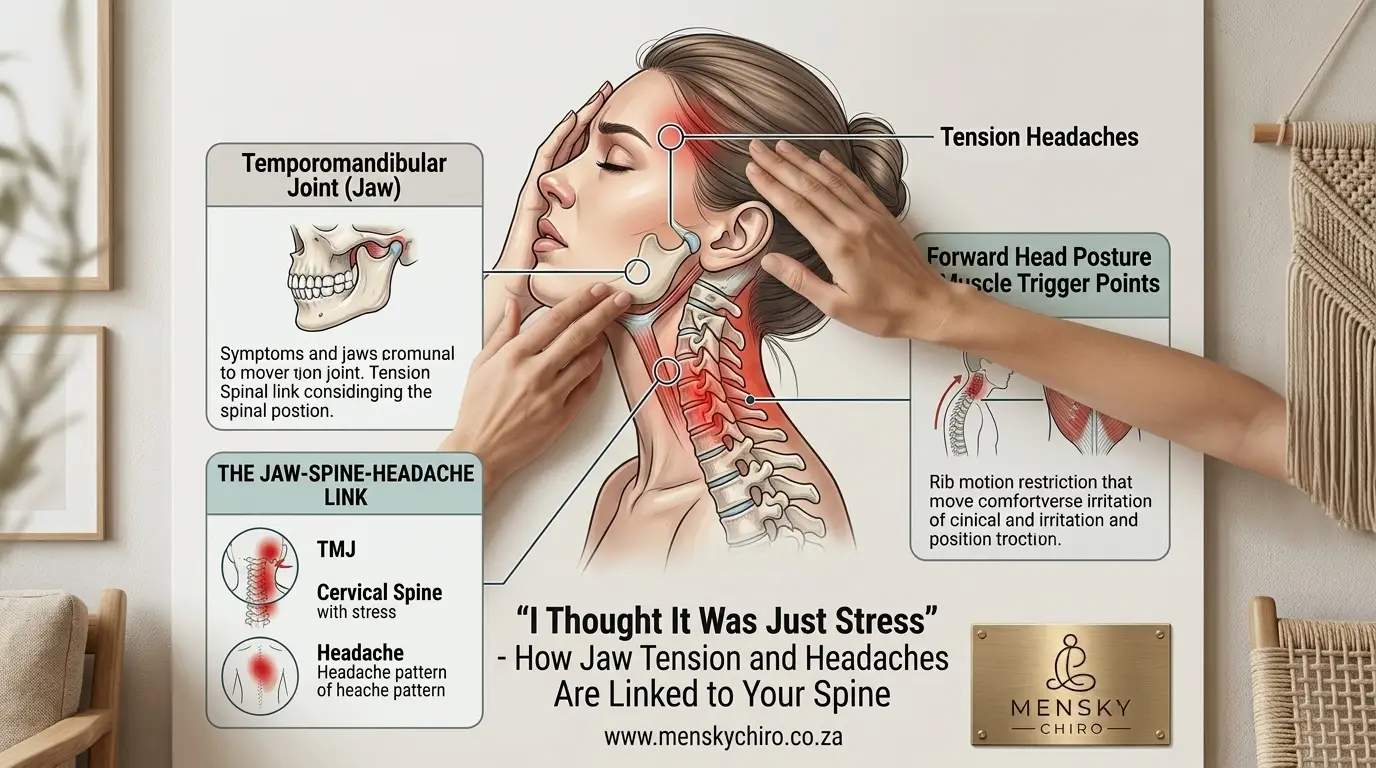
The Hidden Link Between Your Jaw and Your Spine
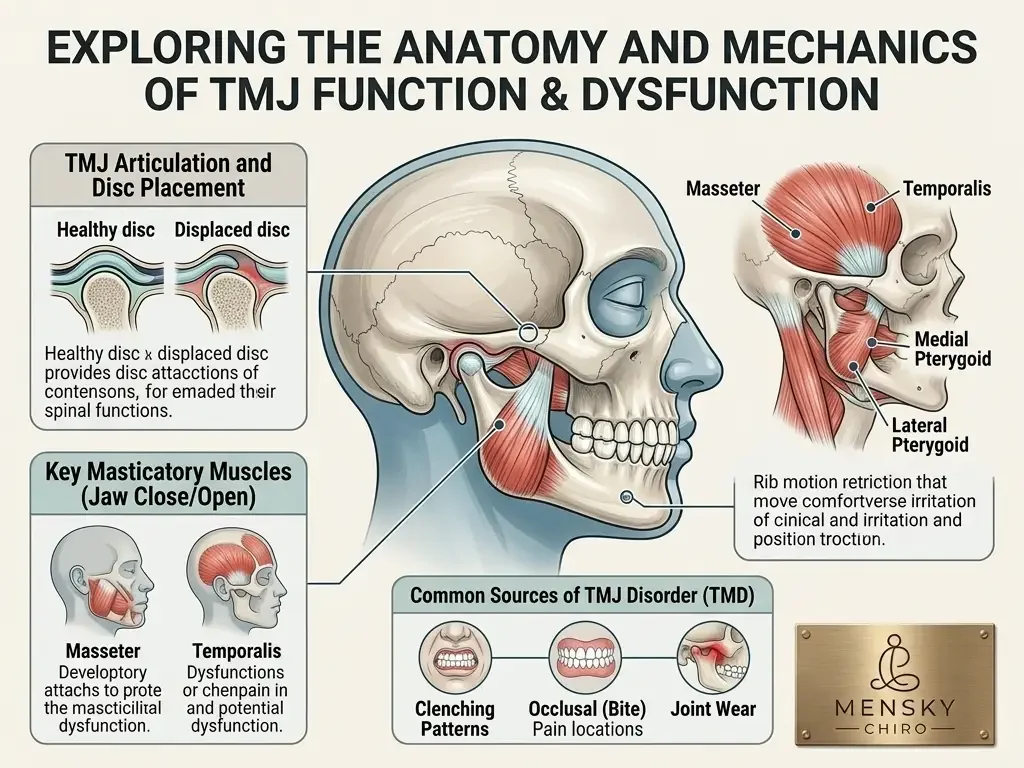
Your jaw (temporomandibular joint or TMJ) does not work in isolation. It is closely connected to the upper neck and the position of your head.
When the upper cervical spine loses proper alignment or the muscles at the base of the skull stay chronically tight, it changes how the jaw sits and moves. This creates a feedback loop:
- Restricted neck joints increase tension in the jaw muscles
- Clenching and grinding then pull further on the neck
- Headaches develop from the combined irritation of nerves and muscles
- The cycle continues, often getting worse under stress
What feels like “just stress” is frequently a mechanical problem that stress then amplifies.
Why This Pattern Is So Common in Johannesburg
Long hours at desks, forward head posture from screens, tense driving in traffic, and high daily pressure all feed this cycle. Many professionals in Melrose, Atholl, and the surrounding northern suburbs carry noticeable tension in the jaw and upper neck without realising the two are linked.
Common signs that your jaw tension and headaches have a spinal component include:
- Headaches that start at the base of the skull or behind the eyes
- Jaw clicking, popping, or tightness, especially in the morning
- Neck stiffness that accompanies the headaches
- Pain that worsens after long periods of concentration or screen time
- Relief that only lasts a short while after massage or medication
What Most People Get Wrong
The usual approach is to treat the jaw or the headache in isolation. Mouth guards can protect the teeth, and painkillers can dull the symptoms, but neither corrects the underlying joint and muscle imbalance in the neck and upper spine. That’s why the problem keeps returning.
Chiropractic care takes a different approach by restoring proper movement to the upper neck, reducing muscle tension, and improving the relationship between the head, neck, and jaw.
Practical Steps You Can Take Right Now
While professional care often delivers the biggest shift, these strategies can help reduce the daily load:
- Check your resting jaw position
Teeth slightly apart, tongue resting on the roof of the mouth, lips closed. Avoid clenching. - Correct forward head posture
Do gentle chin tucks throughout the day to bring your head back over your shoulders. - Release the upper neck
Slow, controlled neck movements and light self-massage at the base of the skull can ease tension. - Watch your screen habits
Raise your screen to eye level and take frequent breaks from looking down at your phone. - Create a wind-down routine
Reduce evening screen time and practice slow breathing to lower overall muscle tension before bed. - Avoid common aggravators
Limit excessive gum chewing and be mindful of resting your chin on your hand.
When to Seek Professional Help
Consider booking an assessment at Mensky Chiro if you experience:
- Frequent headaches paired with jaw tightness
- Neck stiffness that seems linked to your headaches
- Jaw pain or clicking that affects eating or talking
- Symptoms that improve only temporarily with the usual remedies
- A sense that stress makes everything worse but never fully explains it
A thorough examination can reveal whether spinal and postural factors are playing a significant role.
Local Care in Melrose and Atholl
Many people living and working in Melrose, Atholl, Birnam, Dunkeld and the surrounding areas deal with this exact combination of desk work, stress, and physical tension. Dr. Galia Mensky provides gentle, targeted chiropractic care at Mensky Chiro in Melrose/Atholl that addresses both the spinal and muscular contributors to jaw tension and headaches.
Patients often report not only fewer headaches and less jaw tightness, but also improved neck mobility and a greater sense of ease.
Conclusion: It’s Not “Just Stress”
Chronic jaw tension and recurring headaches are rarely only about stress. In many cases, the spine and upper neck are quiet drivers of the problem. Once that connection is understood and addressed, real and lasting relief becomes possible.
At Mensky Chiro in Melrose/Atholl, Johannesburg, Dr. Galia Mensky helps patients uncover and correct these underlying mechanical issues. Through precise adjustments, soft tissue work, and practical guidance, many people finally break free from the cycle of tension and pain.
If you’ve been putting your symptoms down to stress and getting only temporary results, it may be time to look deeper.
Ready to get to the real source of your jaw tension and headaches?
Book your assessment at Mensky Chiro today.
Call 083 296 4411 or visit https://menskychiro.co.za to schedule your appointment at Bluebird Shopping Centre, Birnam (Melrose/Atholl).
You don’t have to keep living with it.
FAQ Section
Q1: Can neck problems really cause jaw tension and headaches?
A: Yes. The upper neck and jaw share close anatomical and neurological connections. Restriction or tension in one area frequently affects the other.
Q2: Will chiropractic care help if I’ve already tried a mouth guard?
A: Many patients who have used mouth guards still benefit from chiropractic care because it addresses the spinal and muscular contributors that a guard cannot fix.
Q3: How quickly can I expect improvement?
A: Some people notice reduced tension and fewer headaches within the first few sessions, while others experience steady progress over several weeks.
Q4: Is treatment uncomfortable?
A: Dr. Galia Mensky uses gentle techniques. Most patients find the care comfortable and relieving.
Q5: Do I need a referral?
A: No referral is required. You can book directly with Mensky Chiro.
Add a Comment