Running-and-hip-bursitis-HN2360-iStock-985099506-Re-Sized

Why Runners in Gauteng Often Experience Hip Pain

You lace up your running shoes before sunrise, excited for your weekend long run. The first few kilometres feel great, but soon a deep ache develops in the front of your hip or the side near your glute. By the end of the run, every stride hurts. Many runners in Gauteng know this scenario all too well.

Whether you’re training for the Comrades Marathon, enjoying trail runs in the Magaliesberg, or doing park runs around Johannesburg and Pretoria, hip pain is one of the most common complaints among local runners. At Mensky Chiro in Bluebird Shopping Centre, Birnam, Dr. Galia Mensky treats many dedicated runners who are frustrated by recurring hip issues that threaten their training and race goals.

Understanding why hip pain is so prevalent for runners in our region is the first step toward fixing it and staying injury-free.

Why Gauteng Runners Are Particularly Prone to Hip Pain

Gauteng’s unique environment and running culture create specific stresses on the hips:

  • High Altitude — Johannesburg and surrounding areas sit at roughly 1,700 metres above sea level. Your body works harder, muscles fatigue faster, and recovery takes longer. This extra demand increases strain on the hip flexors and stabilisers.
  • Hilly and Varied Terrain — Many popular running routes feature constant elevation changes — from the rolling hills of Linksfield and Observatory to the more technical trails around Johannesburg. These ups and downs place repeated stress on the hip joints and surrounding muscles.
  • Hard Surfaces — A large percentage of training happens on tar roads and concrete pavements, which offer little shock absorption and transmit high impact forces directly up through the hips.
  • Training Errors — Many Gauteng runners follow high-mileage programmes with sudden increases in distance or intensity, especially when preparing for big races. This often happens without enough strength or mobility work.
  • Prolonged Sitting — Most runners also have desk jobs, leading to tight hip flexors and weak glute muscles — a dangerous combination when hitting the roads on weekends.

These factors combine to overload the hip complex more than in flatter, lower-altitude regions.

Common Hip Injuries in Gauteng Runners

Dr. Galia Mensky commonly sees the following hip-related issues in runners at her Birnam practice:

Hip Flexor Strain / Tendinopathy Tight iliopsoas muscles from sitting and repetitive hill running become inflamed and painful, especially when lifting the knee.

Gluteal Tendinopathy / Trochanteric Bursitis Pain on the outside of the hip, often worse when lying on the side or climbing hills. Weak glute medius muscles fail to stabilise the pelvis properly.

IT Band Syndrome The iliotibial band becomes tight and rubs over the outside of the hip, causing sharp or burning pain.

Sacroiliac (SI) Joint Dysfunction The pelvis becomes misaligned from uneven loading, referring pain into the hip and lower back.

Labral Irritation or Femoroacetabular Impingement (FAI) Repetitive high-impact activity can irritate the cartilage ring in the hip socket, especially in runners with underlying biomechanical issues.

These conditions rarely appear suddenly — they usually build gradually until they force a runner to reduce mileage or stop completely.

Practical Tips to Prevent and Manage Hip Pain as a Gauteng Runner

  1. Strengthen your hips and glutes Include targeted exercises 2–3 times per week: single-leg bridges, clamshells, side-lying leg lifts, and monster walks with a resistance band.
  2. Improve hip mobility Do daily dynamic stretches such as leg swings, hip circles, and pigeon pose variations. Pay special attention to both hip flexors and external rotators.
  3. Respect the altitude and terrain Increase mileage gradually (no more than 10% per week) and include proper recovery runs. Mix in softer surfaces like grass or trails when possible.
  4. Optimise your running form Avoid overstriding. Focus on a slight forward lean from the ankles and quick, light foot strikes. A gait analysis can identify issues.
  5. Use proper footwear Replace running shoes every 600–800 km. Consider different shoes for road vs trail running.
  6. Prioritise recovery Include foam rolling, regular stretching, good sleep, and nutrition. Consider contrast baths or light swimming on recovery days.
  7. Don’t ignore early warning signs Mild hip tightness after runs should be addressed immediately with mobility work and professional care before it becomes a full injury.

When to See a Sports Chiropractor Johannesburg for Hip Pain

Book an appointment if you experience:

  • Hip pain that persists for more than a few days
  • Pain that worsens with running, especially uphill or on hard surfaces
  • Clicking, catching, or instability in the hip
  • Pain that radiates into the groin, buttock, or down the leg
  • Reduced stride length or limping during runs

A sports chiropractor Johannesburg can identify the exact mechanical cause and create a targeted treatment and rehabilitation plan.

Johannesburg and Gauteng Running Culture

From the vibrant running community at parkruns in Delta Park and Zoo Lake to serious training groups preparing for Two Oceans or Comrades, Gauteng runners are passionate and dedicated. However, the combination of high training volumes, demanding work schedules, and our challenging local conditions means many runners battle recurring hip issues.

Dr. Galia Mensky at Mensky Chiro understands this active lifestyle. Her conveniently located practice in Bluebird Shopping Centre, Birnam, serves runners from across Johannesburg and surrounding areas who want to stay on the road and reach their goals pain-free.

Conclusion: Run Stronger and Longer in Gauteng

Hip pain doesn’t have to be an accepted part of being a runner in Gauteng. By understanding the unique demands our environment places on your body and addressing them with smart training, mobility work, and expert chiropractic care, you can reduce pain and prevent future injuries.

At Mensky Chiro, Dr. Galia Mensky provides specialised sports chiropractic care that helps runners restore proper hip mechanics, strengthen weak areas, and return to training stronger. Many local runners have successfully overcome stubborn hip pain and achieved personal bests after working with her.

Don’t let hip pain sideline your running dreams. Effective, natural solutions are available to keep you moving comfortably on Gauteng’s roads and trails.

Ready to run without hip pain?

Book your sports chiropractic assessment at Mensky Chiro today. Call 083 296 4411 or visit https://menskychiro.co.za to schedule your appointment at Bluebird Shopping Centre, Birnam.

Take the first step toward pain-free running and enjoy every kilometre you love in Gauteng.


FAQ Section

Q1: Why do so many runners in Gauteng get hip pain? A: High altitude, hilly terrain, hard surfaces, and common muscle imbalances from desk jobs all place extra stress on the hips.

Q2: Can chiropractic care help runners with hip pain? A: Yes. Sports chiropractic restores joint movement, reduces muscle tension, corrects pelvic alignment, and supports faster recovery.

Q3: Should I stop running if I have hip pain? A: Not always. Many runners can continue with modified training while receiving treatment. A proper assessment will guide the best approach.

Q4: How long does it take to recover from runner’s hip pain? A: It varies, but many patients see significant improvement within 4–8 sessions when combining chiropractic care with targeted exercises.

Q5: Do I need a referral to see a sports chiropractor in Johannesburg? A: No referral is needed. You can book directly with Mensky Chiro for a thorough running-specific assessment.

Headache-page-Cervicogenic-Headaches-image-1-scaled

Headaches That Originate from the Neck: What You Need to Know

You wake up with a headache again. It starts at the base of your skull, spreads over one side of your head, and feels worse when you turn your neck. Painkillers help a little, but the headache keeps returning — especially after long days at your desk. If this sounds familiar, your headaches may not be starting in your head at all. They could be coming from your neck.

These are called cervicogenic headaches, and they’re far more common than most people realise, especially among busy professionals in Johannesburg. At Mensky Chiro in Bluebird Shopping Centre, Birnam, Dr. Galia Mensky regularly helps patients find lasting relief by addressing the neck as the true source of their headaches.

Understanding this connection is often the key to breaking the cycle of recurring head pain.

What Are Cervicogenic Headaches?

Cervicogenic headaches are secondary headaches — meaning they’re caused by a problem in another part of the body, in this case, the neck (cervical spine). Pain signals from irritated joints, tight muscles, or compressed nerves in the upper neck refer pain into the head.

Unlike migraines, these headaches are usually one-sided and are closely linked to neck movement or position. They often start in the back of the head or upper neck and travel forward to the forehead, temple, or behind the eye.

How the Neck Causes Headaches

The upper cervical spine (C1, C2, and C3 vertebrae) shares nerve pathways with the head and face. When structures in this area become dysfunctional, the brain can interpret the pain as coming from the head.

Common triggers Dr. Galia Mensky sees in her Birnam practice include:

  • Restricted facet joints in the upper neck from poor posture
  • Tight suboccipital muscles at the base of the skull
  • Forward head posture from prolonged screen use
  • Upper cervical muscle tension caused by stress or poor ergonomics
  • Previous whiplash or minor neck trauma that was never properly addressed

These issues create inflammation and altered mechanics that refer pain into the head, often accompanied by neck stiffness or reduced range of motion.

Recognising Neck-Related Headaches

How do you know if your headache is coming from your neck? Look for these typical signs:

  • Pain begins in the neck or base of the skull
  • Headache worsens with neck movement or sustained positions
  • Reduced ability to turn or tilt your head
  • Tenderness when pressing on the upper neck muscles
  • Headache accompanied by shoulder or upper back tightness
  • Pain is usually steady and dull rather than throbbing or pulsing

Many patients also notice their headaches get worse by the end of the workday, after long commutes, or following extended computer time.

Practical Tips to Reduce Neck-Related Headaches

You can take meaningful steps to prevent and manage these headaches:

  1. Practise chin tucks Gently draw your chin back (like making a double chin) several times a day. This strengthens deep neck flexors and counters forward head posture.
  2. Improve your workstation Position your screen at eye level and keep your keyboard close so your shoulders stay relaxed. Consider a monitor riser or laptop stand.
  3. Take frequent neck breaks Every 30–45 minutes, stand up, gently roll your shoulders, and do slow neck rotations and side bends.
  4. Optimise sleeping position Use a supportive pillow that maintains the natural curve of your neck. Avoid stomach sleeping, which twists the neck for hours.
  5. Stay hydrated Dehydration tightens muscles and can worsen headache frequency. Aim for 2–3 litres of water daily, especially important in Johannesburg’s climate.
  6. Gentle upper back stretches Doorway chest stretches and upper trapezius stretches help release tension that contributes to referred head pain.
  7. Manage screen time posture Hold your phone at eye level instead of looking down. Use voice commands where possible to reduce neck strain.

When to See a Chiropractor for Neck-Related Headaches

Don’t keep treating the symptom when the cause is in your neck. Book an assessment with a chiropractor Johannesburg patients trust if you experience:

  • Frequent headaches that start in the neck
  • Head pain accompanied by neck stiffness or reduced movement
  • Headaches that worsen with desk work or driving
  • Pain that returns despite medication or rest
  • Associated dizziness, visual disturbances, or shoulder pain

Early chiropractic intervention can significantly reduce both the frequency and intensity of these headaches.

Johannesburg Lifestyle Factors That Contribute to Neck Headaches

Long hours at desks in Sandton and Rosebank offices, combined with stressful commutes on the N1 and M1, create perfect conditions for neck dysfunction. Many professionals also carry extra tension from high-pressure work environments and spend additional time on phones while navigating our busy city.

Dr. Galia Mensky at Mensky Chiro understands these local challenges. Her practice in Bluebird Shopping Centre, Birnam, offers convenient access for residents in Melrose, Dunkeld, Victory Park, and surrounding suburbs seeking effective neck pain relief Johannesburg without disrupting their demanding schedules.

How Chiropractic Care Helps Neck-Origin Headaches

Chiropractic care is highly effective for cervicogenic headaches because it directly targets the source. Dr. Mensky uses gentle, specific adjustments to restore proper movement to the upper cervical joints, release tight muscles, and improve overall neck posture and function.

Many patients report noticeable reduction in headache frequency and intensity within just a few sessions. Chiropractic also addresses contributing factors like posture and muscle imbalances for longer-lasting results.

Conclusion: Stop Treating the Symptom — Address the Cause

If your headaches keep returning despite tablets and rest, the problem may be hiding in your neck. Recognising this connection opens the door to real, lasting relief rather than temporary masking of symptoms.

At Mensky Chiro in Bluebird Shopping Centre, Birnam, Dr. Galia Mensky provides personalised chiropractic care that has helped many Johannesburg patients finally break free from recurring neck-related headaches. Through gentle adjustments, soft tissue work, and practical advice, she helps restore comfort and improve daily quality of life.

You don’t have to accept frequent headaches as normal. Effective, natural solutions are available.

Ready to find the real source of your headaches and get lasting relief?

Book your chiropractic assessment today at Mensky Chiro. Call 083 296 4411 or visit https://menskychiro.co.za to schedule your appointment.

Take the first step toward fewer headaches and a more comfortable neck. Your future self will thank you.


Internal Linking Suggestions:

  • Link to: “Neck Pain in the Digital Age: How Screen Time Is Changing Posture”
  • Link to: “The Hidden Link Between Stress and Chronic Muscle Tension”
  • Link to: “Headaches That Originate from the Neck: What You Need to Know” (self)
  • Link to: “Can Chiropractic Care Improve Sleep Quality?”
  • Link to: “What Happens During Your First Chiropractic Consultation”

FAQ Section

Q1: What is a cervicogenic headache? A: A headache caused by problems in the neck, such as joint dysfunction or muscle tension, that refers pain into the head.

Q2: How can I tell if my headache is coming from my neck? A: If the pain starts in the neck or base of the skull and worsens with neck movement or certain positions, it is likely cervicogenic.

Q3: Can chiropractic care really help headaches? A: Yes. Many patients experience significant reduction in headache frequency and intensity through gentle neck adjustments and posture correction.

Q4: How many sessions are usually needed? A: Many people notice improvement within 4–6 sessions, though individual results vary depending on how long the problem has existed.

Q5: Are chiropractic adjustments safe for headaches? A: When performed by an experienced chiropractor after a thorough assessment, adjustments are very safe and effective for neck-related headaches.

leaning-forward-2_posture-mistakes

Posture Mistakes Office Workers Make Every Day

You start your day with good intentions — sitting tall at your desk in your Johannesburg office. But by 10am you’ve already slumped forward. By lunchtime your shoulders are rounded, your neck is craned toward the screen, and that familiar ache between your shoulder blades has returned.

Sound familiar? If you spend most of your day at a desk, you’re not alone. Countless professionals across Sandton, Rosebank, and the Johannesburg CBD unknowingly repeat small posture mistakes that slowly damage their spine and create chronic pain.

At Mensky Chiro in Bluebird Shopping Centre, Birnam, Dr. Galia Mensky sees these patterns daily. Many patients are surprised to learn that simple, everyday habits at work are the real reason behind their persistent neck, shoulder, and back pain.

Why Good Posture Matters More Than You Think

Your spine is designed with natural curves that help absorb shock and maintain balance. When you repeatedly adopt poor posture, these curves become distorted. Muscles work harder than they should, joints become restricted, and uneven pressure builds on discs and ligaments.

Over time, these small daily mistakes add up to stiffness, pain, headaches, and reduced energy. The good news is that becoming aware of these mistakes is the first step toward fixing them.

The 8 Most Common Posture Mistakes Johannesburg Office Workers Make

Here are the posture errors Dr. Galia Mensky sees most often in her Birnam practice:

1. Forward Head Posture (“Tech Neck”) Crane your neck forward to read your screen or look at your phone. This adds massive extra weight to your cervical spine and strains the muscles at the back of your neck.

2. Rounded Shoulders Shoulders roll forward while typing or using a mouse. This tightens the chest muscles and weakens the upper back, creating that hunched appearance and mid-back pain.

3. Slouching in the Chair Sliding down in your seat so your lower back loses its natural curve. This puts enormous pressure on the lumbar discs and leads to lower back pain by the end of the day.

4. Crossing Your Legs Crossing legs at the knees or ankles tilts the pelvis and creates uneven stress through the lower back and hips. Many patients notice one side feels tighter than the other.

5. Desk Too Low or Screen Too High/Low When your keyboard is too low, you hunch your shoulders. When your screen is too low, you drop your head. Both positions force your spine out of alignment.

6. Holding the Phone Between Ear and Shoulder This classic mistake twists the neck for long periods while on calls, creating one-sided muscle tension and joint stiffness.

7. Sitting Too Close or Too Far from the Desk Being too close forces your elbows up. Sitting too far makes you lean forward, straining both neck and lower back.

8. Static Posture for Too Long Even “perfect” posture becomes harmful if you hold it without moving. Staying frozen in one position for hours reduces blood flow and increases muscle fatigue.

These mistakes often feel small in the moment, but they create significant mechanical stress over months and years.

Practical Tips to Fix Your Posture at Work

You don’t need a complete office overhaul to improve. Try these practical changes that fit into real Johannesburg workdays:

  1. Set up your workstation correctly Adjust your chair so your feet are flat on the floor and your knees are at 90 degrees. Your screen should be at eye level — use a laptop stand or monitor riser if needed.
  2. Use the 20-20-20 rule Every 20 minutes, look 20 feet away for 20 seconds. Stand up, roll your shoulders, and do a few gentle neck movements.
  3. Sit tall with support Keep your lower back against the chair with a small lumbar support or rolled towel. Imagine a string gently pulling the top of your head upward.
  4. Position your keyboard and mouse close Keep them at a height where your elbows stay relaxed at your sides, not elevated.
  5. Take movement breaks Set a timer to stand, walk to the kitchen, or do simple stretches every 45–60 minutes. Even better — hold walking meetings when possible.
  6. Strengthen postural muscles Do simple exercises like shoulder blade squeezes, chin tucks, and wall angels for 2–3 minutes several times a day.
  7. Use a standing desk option If available, alternate between sitting and standing throughout the day.

Small, consistent changes like these can dramatically reduce the strain on your spine.

When to See a Chiropractor for Posture-Related Pain

Consider visiting a chiropractor Johannesburg patients recommend when posture mistakes have led to:

  • Persistent neck or shoulder pain that worsens during the workday
  • Recurring headaches, especially at the base of the skull
  • Mid or lower back pain that improves slightly with rest but returns quickly
  • Tightness that makes it difficult to sit comfortably for long periods
  • Reduced ability to turn your head or maintain good posture

A chiropractor can assess your specific posture patterns, release restricted joints, and create a personalised plan to correct imbalances.

Johannesburg Office Life and Posture Challenges

Working in Johannesburg often means long hours at desks, open-plan offices with shared furniture that doesn’t fit everyone, and stressful commutes that add extra time in poor sitting positions. Many professionals also work hybrid schedules, switching between ergonomic office setups and less-than-ideal home workstations.

Dr. Galia Mensky at Mensky Chiro understands these realities. Her practice in Bluebird Shopping Centre, Birnam, is conveniently located for professionals in Melrose, Dunkeld, Rosebank, and nearby suburbs who want practical solutions without taking too much time away from their busy schedules.

Conclusion: Small Posture Changes Create Big Results

Poor posture isn’t just about appearance — it directly affects how you feel every day. The good news is that with awareness, simple adjustments, and professional support, you can correct these mistakes and reduce pain significantly.

At Mensky Chiro, Dr. Galia Mensky combines gentle chiropractic adjustments, soft tissue work, and targeted exercises to help office workers improve posture and eliminate chronic pain. Many patients report feeling taller, more energetic, and far more comfortable at work after consistent care.

You don’t have to accept pain as part of your office job. Better posture and greater comfort are achievable.

Ready to fix your posture and feel better at work?

Book your chiropractic posture assessment at Mensky Chiro today. Call 083 296 4411 or visit https://menskychiro.co.za to schedule your appointment at Bluebird Shopping Centre, Birnam.

Take control of your posture and enjoy pain-free days in the office and beyond.


FAQ Section

Q1: Can bad posture really cause chronic pain? A: Yes. Poor posture places abnormal stress on muscles, joints, and discs, eventually leading to pain, stiffness, and headaches.

Q2: How quickly can chiropractic care improve posture? A: Many patients notice improved mobility and reduced pain within a few sessions, while visible posture changes develop over several weeks with consistent care and exercises.

Q3: Will fixing my posture eliminate all my pain? A: In most cases, correcting posture-related mechanical issues significantly reduces or eliminates pain, especially when combined with chiropractic treatment.

Q4: Do I need special equipment to fix my work posture? A: Not necessarily. Simple adjustments to your chair, screen height, and movement habits often make a big difference.

Q5: Is it too late to improve my posture if I’ve had bad habits for years? A: It’s never too late. The body responds well to chiropractic care and corrective exercises at any age.

fghd

Understanding Sciatica and Its Treatment Options

That shooting pain that starts in your lower back or buttock and travels down one leg can stop you in your tracks. Some days it feels like a deep ache, other times it’s a sharp, electric sensation that makes walking, sitting, or even sleeping difficult. If you’ve experienced this, you’re likely dealing with sciatica — a common but often misunderstood condition.

At Mensky Chiro in Bluebird Shopping Centre, Birnam, Dr. Galia Mensky sees many Johannesburg patients frustrated by sciatica. They’ve often tried painkillers, rest, or heat packs with only temporary relief. The good news is that when you understand what’s really causing the pain, effective, natural solutions become available.

What Exactly Is Sciatica?

Sciatica isn’t a diagnosis on its own — it’s a set of symptoms. It occurs when the sciatic nerve, the longest and thickest nerve in the body, becomes irritated or compressed. This nerve runs from your lower back, through your hips and buttocks, and down each leg.

When irritated, the sciatic nerve can cause pain anywhere along its path — from the lower back to the calf or even the foot. You might also feel numbness, tingling (“pins and needles”), or muscle weakness in the affected leg.

The pain is usually felt on only one side of the body and can range from mild discomfort to severe, debilitating pain that makes daily activities nearly impossible.

Common Causes of Sciatica in Johannesburg Adults

Several mechanical issues can irritate the sciatic nerve. Dr. Galia Mensky commonly sees these causes in her Birnam practice:

Lumbar disc irritation or herniation When a disc in the lower back bulges or herniates, it can press on or inflame the nerve roots that form the sciatic nerve.

Piriformis syndrome The piriformis muscle, located deep in the buttock, can tighten or spasm and compress the sciatic nerve as it passes underneath or through the muscle. This is very common in people who sit for long periods.

Sacroiliac (SI) joint dysfunction Misalignment or inflammation in the pelvic joints can create uneven pressure and refer pain along the sciatic pathway.

Spinal stenosis or facet joint irritation Narrowing of the spinal canal or inflamed small joints in the lower back can irritate the nerve, especially in older adults or those with long-standing poor posture.

Muscle imbalances from prolonged sitting Many Johannesburg professionals who sit at desks all day develop tight hip flexors and weak glute muscles. This imbalance puts extra stress on the lower back and pelvis, increasing sciatica risk.

Other contributing factors include pregnancy (due to added weight and relaxin hormone), previous injuries, and repetitive twisting movements.

Why Sciatica Pain Feels So Different

Unlike simple muscle strain, sciatic pain often has a distinct “nerve” quality — sharp, burning, or electric. It can worsen with coughing, sneezing, sitting for long periods, or driving. Many patients notice the pain intensifies after long commutes on Johannesburg highways or after sitting through long meetings.

The pain can come and go, or it may become constant. Some people also experience lower back pain along with the leg symptoms, while others feel mostly leg pain with very little back discomfort.

Practical Tips to Manage Sciatica Symptoms at Home

While professional care is often needed for lasting relief, these strategies can help reduce irritation in the meantime:

  1. Avoid prolonged sitting Stand up and walk around every 20–30 minutes. When driving, take breaks to stretch your legs and hips.
  2. Use ice and heat wisely In the first 48–72 hours of a flare-up, use ice to reduce inflammation. After that, alternate with gentle heat to relax tight muscles.
  3. Gentle movement is better than complete rest Short, frequent walks are usually more helpful than lying down all day. Avoid high-impact activities until the acute pain settles.
  4. Try the “figure-4” stretch carefully While lying on your back, cross the affected leg over the other knee and gently pull the thigh toward you. Stop if it increases leg pain.
  5. Support your lower back when sitting Use a small lumbar roll or rolled towel behind your lower back to maintain its natural curve.
  6. Sleep position matters Sleep on your side with a pillow between your knees to keep your pelvis aligned.

These tips offer temporary relief, but they work best when combined with professional treatment that addresses the root cause.

When to See a Chiropractor for Sciatica

Don’t wait until the pain becomes unbearable. Visit a chiropractor Johannesburg patients trust when you notice:

  • Sharp pain, numbness, or tingling running down one leg
  • Pain that lasts more than a few days despite rest and home care
  • Weakness in the leg or foot (difficulty lifting your foot or toes)
  • Pain that interferes with walking, working, or sleeping
  • Recurring episodes of sciatica

Early intervention often leads to faster recovery and helps prevent the problem from becoming chronic.

Local Relevance: Sciatica in Johannesburg Lifestyle

Johannesburg’s combination of long sitting hours in offices, stressful commutes on the N1 and M1, and sometimes uneven walking surfaces in our suburbs creates ideal conditions for sciatica to develop. Many patients at Mensky Chiro mention that their symptoms worsen after long days at their desks followed by sitting in traffic, or after weekends spent on their feet doing household chores.

Dr. Galia Mensky understands these local realities. Her practice at Bluebird Shopping Centre, Birnam, is easily accessible for residents from Melrose, Dunkeld, Rosebank, and surrounding areas who need practical back pain treatment Johannesburg without long travel times during painful flare-ups.

How Chiropractic Care Helps Sciatica

Chiropractic care focuses on restoring proper movement and alignment to the lower back and pelvis, reducing pressure on the sciatic nerve. Dr. Mensky uses gentle spinal adjustments, soft tissue techniques, and specific rehabilitation exercises tailored to each patient’s condition.

Many patients experience reduced leg pain and improved mobility within the first few weeks. Unlike pain medication that only masks symptoms, chiropractic treatment aims to correct the underlying mechanical dysfunction so the nerve can heal naturally.

Conclusion: You Don’t Have to Live with Sciatica Pain

Sciatica can be incredibly frustrating and limiting, but it usually responds well to the right approach. Understanding the cause and addressing it with gentle, targeted care can help you return to your normal daily activities with far less discomfort.

At Mensky Chiro in Bluebird Shopping Centre, Birnam, Dr. Galia Mensky offers individualised chiropractic care for sciatica that focuses on long-term relief and prevention of recurrence. Many Johannesburg patients have found lasting improvement through this natural, drug-free method.

If sciatica is affecting your work, sleep, or quality of life, you have effective options available.

Ready to find real relief from sciatica?

Book your chiropractic assessment today at Mensky Chiro. Call 083 296 4411 or visit https://menskychiro.co.za to schedule your appointment.

Don’t let sciatica control your days. Take the first step toward comfortable movement and lasting back pain treatment Johannesburg you can trust.


FAQ Section

Q1: What is the difference between back pain and sciatica? A: Sciatica involves irritation of the sciatic nerve and typically causes pain, numbness, or tingling that travels down the leg, whereas simple back pain usually stays in the lower back area.

Q2: Can chiropractic care really help sciatica? A: Yes. By restoring proper alignment and movement to the spine and pelvis, chiropractic adjustments often reduce pressure on the sciatic nerve and provide significant relief.

Q3: How many sessions are typically needed for sciatica relief? A: Many patients notice improvement within 4–8 sessions, though the exact number depends on the cause and how long the symptoms have been present.

Q4: Is it safe to adjust the spine when someone has sciatica? A: When performed by an experienced chiropractor after a thorough assessment, spinal adjustments are safe and often very effective for sciatica.

Q5: Should I see a doctor or chiropractor first for sciatica? A: For most mechanical cases of sciatica, seeing a chiropractor early is appropriate. If you have severe weakness, bowel or bladder changes, or fever, seek medical attention immediately.

physiotherapist-helping-to-beautiful-pregnant-UYVEVLP-copy-e1587599259399

How Chiropractic Care Supports Pregnancy Wellness

The journey through pregnancy is beautiful, but it can also be physically challenging. As your baby grows, your body goes through rapid changes that often lead to back pain, pelvic pressure, sciatica-like symptoms, and difficulty finding a comfortable sleeping position. Many expectant mothers in Johannesburg silently endure these discomforts, believing they’re simply “part of pregnancy.”

At Mensky Chiro in Bluebird Shopping Centre, Birnam, Dr. Galia Mensky has helped numerous pregnant women find safe, gentle, and drug-free relief. Chiropractic care during pregnancy isn’t about forcing the body — it’s about supporting your changing biomechanics so you can enjoy this special time with less pain and greater comfort.

How Pregnancy Changes Your Body and Spine

During pregnancy, your body produces a hormone called relaxin. This hormone softens ligaments and joints to prepare for childbirth, but it also makes your spine and pelvis more mobile — and sometimes less stable.

As your belly grows, your centre of gravity shifts forward. This causes your lower back to curve more (increased lumbar lordosis), putting extra pressure on the lumbar discs and facet joints. Your shoulders often round forward to balance the weight, straining the upper back and neck.

The pelvis can become misaligned or restricted, especially in the sacroiliac (SI) joints. This misalignment frequently contributes to:

  • Lower back pain that worsens when standing or walking
  • Pelvic girdle pain (PGP) or symphysis pubis dysfunction (SPD)
  • Sciatica — sharp pain radiating down one leg
  • Hip discomfort and tightness
  • Round ligament pain
  • Difficulty turning in bed or getting in and out of a car

Many women also experience mid-back tension from the extra weight they’re carrying and changes in breathing patterns as the uterus expands.

These changes don’t happen overnight. They build gradually, which is why many women notice symptoms becoming more noticeable in the second and third trimesters.

The Benefits of Chiropractic Care During Pregnancy

Chiropractic care offers a safe, non-invasive way to support your body through these changes. Dr. Galia Mensky uses gentle, pregnancy-specific techniques that avoid any high-force movements or twisting of the abdomen.

Key benefits many pregnant patients experience include:

  • Reduced lower back and pelvic pain through improved joint alignment
  • Better pelvic balance, which may help create more space for the baby to settle into an optimal position
  • Decreased muscle tension in the neck, shoulders, and upper back
  • Improved sleep quality as discomfort eases
  • Easier movement for daily activities like walking, driving, and working

Research and clinical experience show that chiropractic care during pregnancy can significantly reduce pain levels and improve quality of life without the need for medication.

Practical Tips for Managing Pregnancy Discomfort in Johannesburg

While chiropractic care provides excellent support, these everyday strategies can help you feel more comfortable between visits:

  1. Maintain good posture Stand tall with your shoulders back and avoid locking your knees. When sitting, use a small lumbar roll or rolled towel to support your lower back’s natural curve.
  2. Sleep smarter Sleep on your side with a pillow between your knees and another under your belly for support. This helps keep your pelvis and spine aligned.
  3. Stay gently active Prenatal yoga, swimming, or short walks in Johannesburg parks (like the Botanical Gardens or Emmarentia Dam) help maintain mobility without high impact.
  4. Use proper body mechanics When getting out of bed, roll to your side first and use your arms to push up. Bend at the knees rather than the waist when picking things up.
  5. Wear supportive shoes Avoid high heels. Choose shoes with good cushioning to reduce stress on your lower back and pelvis.
  6. Stay hydrated and eat well Proper nutrition and hydration support ligament health and help reduce swelling and muscle cramps.
  7. Take regular breaks If you’re working, stand and walk around every 30–45 minutes. Many Johannesburg offices now offer standing desks or allow flexible arrangements for pregnant staff.

When Should You See a Chiropractor During Pregnancy?

It’s never too early or too late to seek chiropractic support. Consider booking an appointment if you experience:

  • Persistent lower back or pelvic pain
  • Pain that radiates into your hips or legs
  • Difficulty walking, climbing stairs, or turning in bed
  • Neck or upper back tension from postural changes
  • Any discomfort that affects your daily activities or sleep

Many women begin care in the first or second trimester for prevention and continue through the third trimester and even postpartum. Chiropractic care is safe throughout all stages of pregnancy when performed by a practitioner experienced in prenatal techniques.

Johannesburg Pregnancy and the Need for Chiropractic Support

Pregnancy in Johannesburg comes with its own unique challenges. Many expectant mothers continue working until late in their pregnancy, facing long commutes on busy highways, variable weather, and the physical demands of navigating our city’s hilly suburbs and shopping centres.

Load-shedding can also disrupt comfortable sleeping routines or make it harder to stay active. Dr. Galia Mensky understands these realities and tailors care to fit around busy schedules and local lifestyle factors.

Her conveniently located practice at Bluebird Shopping Centre in Birnam makes it easy for women from Melrose, Dunkeld, Rosebank, Victory Park, and surrounding areas to receive regular, supportive care without adding extra stress to their day.

Conclusion: Supporting Your Body Naturally Through Pregnancy

Pregnancy is a time of incredible change. While some discomfort is common, you don’t have to simply accept pain as inevitable. Gentle chiropractic care can help your body adapt more comfortably, reduce pain, and support better pelvic alignment as you prepare for birth.

At Mensky Chiro, Dr. Galia Mensky provides compassionate, specialised chiropractic care for pregnant women. Using safe, modified techniques, she helps many expectant mothers in Johannesburg experience greater comfort, improved mobility, and a more positive pregnancy journey.

If you’re pregnant and struggling with back pain, pelvic discomfort, or postural changes, know that safe, effective help is available.

Ready to feel more comfortable during your pregnancy?

Book your chiropractic consultation at Mensky Chiro today. Call 083 296 4411 or visit https://menskychiro.co.za to schedule your appointment at Bluebird Shopping Centre, Birnam.

Let Dr. Galia Mensky support your body naturally so you can focus on the joy of this special time.


FAQ Section

Q1: Is chiropractic care safe during pregnancy? A: Yes. When performed by a chiropractor experienced in prenatal care, techniques are modified to be gentle and safe for both mother and baby at every stage of pregnancy.

Q2: Can chiropractic help with pelvic girdle pain or SPD? A: Many women experience significant relief from pelvic and lower back pain through gentle adjustments that improve pelvic alignment and reduce joint stress.

Q3: When is the best time to start chiropractic care during pregnancy? A: You can start at any time. Some women begin early for prevention, while others seek help when discomfort appears in the second or third trimester.

Q4: Will adjustments hurt during pregnancy? A: No. Dr. Mensky uses very gentle, low-force techniques specifically adapted for pregnant patients. Most women find the care comfortable and relaxing.

Q5: Can chiropractic care help after birth too? A: Yes. Postpartum chiropractic care helps restore pelvic and spinal alignment, supports recovery, and addresses the physical demands of caring for a newborn.

1872379

The Hidden Link Between Stress and Chronic Muscle Tension

You’ve had another demanding week in Johannesburg. Deadlines at the office, traffic that tested your patience, and worries about family or finances keep playing in your mind. By Friday evening your shoulders feel like rocks, your neck is stiff, and there’s a constant ache between your shoulder blades that no amount of stretching seems to fix. You tell yourself it’s just tiredness, but deep down you suspect something more is going on.

This experience is far more common than most people realise. Stress doesn’t only affect your mind — it has a very real, physical impact on your muscles and spine. At Mensky Chiro in Bluebird Shopping Centre, Birnam, Dr. Galia Mensky frequently helps patients discover that their chronic muscle tension and resulting pain are closely tied to the stress in their daily lives.

Understanding this hidden link is often the first step toward lasting relief.

How Stress Creates Chronic Muscle Tension in the Body

When your brain perceives stress — whether from work pressure, financial concerns, or the general pace of life in Johannesburg — it activates your body’s fight-or-flight response. This ancient survival mechanism releases hormones like cortisol and adrenaline.

One of the immediate physical effects is increased muscle tone. Your muscles, particularly in the neck, shoulders, upper back, and jaw, tighten up to prepare you for action. In short bursts this response can be helpful, but when stress becomes constant, the muscles never fully relax.

Over weeks and months, this sustained contraction leads to several problems:

  • Muscles become fatigued and develop painful trigger points (tight knots)
  • Blood flow to the area decreases, reducing oxygen and nutrient delivery
  • Joints in the spine and shoulders lose smooth movement because surrounding muscles pull unevenly
  • The nervous system stays in a heightened state, making you even more sensitive to pain

This creates a vicious cycle: stress causes tension, tension causes pain, pain causes more stress, and the cycle continues.

Many patients are surprised to learn that what they thought was purely a “back problem” or “neck issue” is actually their body’s way of expressing unresolved stress.

Common Patterns of Stress-Related Muscle Tension Dr. Mensky Treats

In her Birnam practice, Dr. Galia Mensky sees clear patterns among Johannesburg patients:

Upper trapezius and levator scapulae tightness These shoulder muscles often feel like tight bands or rocks. Patients describe a heavy, burning sensation that worsens as the week progresses.

Cervical (neck) muscle tension Constant low-level contraction in the neck muscles contributes to headaches that start at the base of the skull and spread forward.

Mid-back (thoracic) stiffness The area between the shoulder blades becomes locked and painful, especially noticeable when trying to sit up straight or take a deep breath.

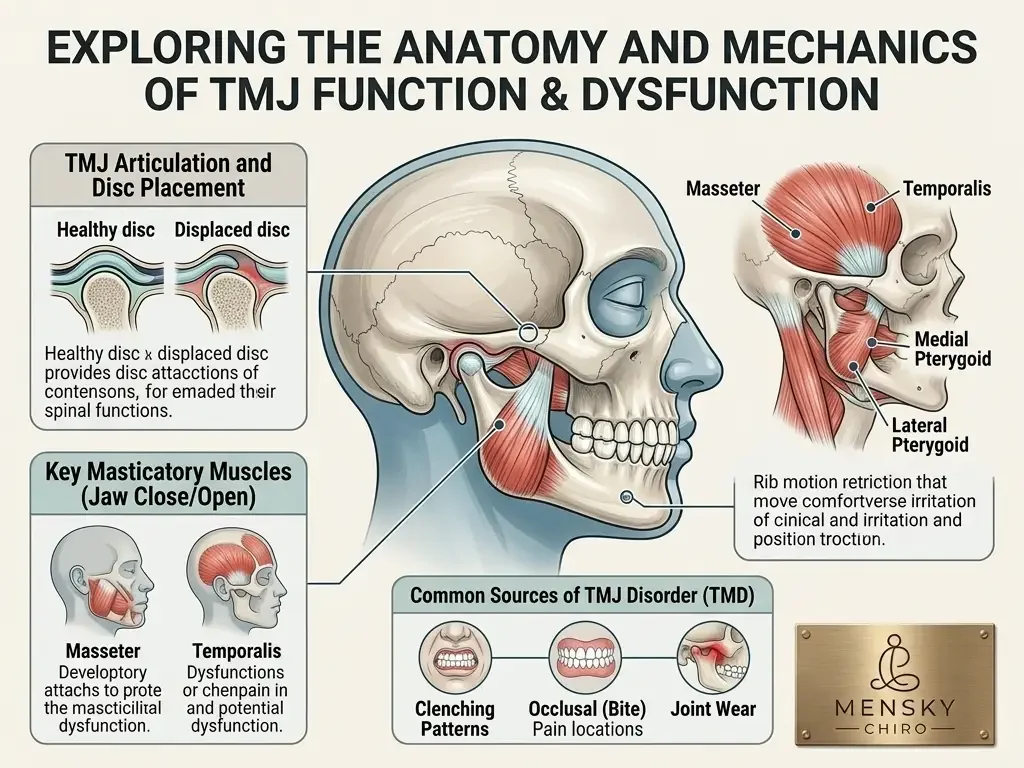
Jaw clenching and TMJ discomfort Many stressed professionals unconsciously clench their teeth during the day or grind at night, adding extra strain that refers pain into the neck and head.

Lower back tension When stress affects breathing and posture, the lower back muscles (especially quadratus lumborum) stay contracted, contributing to persistent lower back discomfort.

These symptoms often feel worse in the late afternoon or evening and can disturb sleep, which then makes stress levels even higher the next day.

Practical Tips to Break the Stress-Tension Cycle

You can start reducing the physical effects of stress with these practical, everyday strategies:

  1. Practise conscious breathing Try the 4-7-8 technique: inhale for 4 seconds, hold for 7, exhale for 8. Do this several times during the day, especially when you feel your shoulders rising toward your ears.
  2. Release tension at your desk Every hour, drop your shoulders deliberately, gently tuck your chin, and roll your shoulders back. Set a phone reminder if needed.
  3. Move your body daily Even a 10–15 minute walk in a local park or around your neighbourhood helps discharge built-up muscle tension and lowers stress hormones.
  4. Progressive muscle relaxation Before bed, tense and then slowly release muscle groups starting from your toes up to your face. This teaches your body the difference between tension and relaxation.
  5. Improve your work environment Ensure your screen is at eye level and take regular micro-breaks to stand and move. Small changes in ergonomics reduce the physical load that stress amplifies.
  6. Create wind-down routines Avoid screens for at least 30 minutes before bed. Try gentle stretching, reading, or listening to calming music instead.
  7. Stay hydrated and eat well Dehydration and blood sugar fluctuations can make muscle tension feel worse. Keep water nearby and choose balanced meals.

These habits won’t eliminate stress entirely, but they can significantly reduce how much it affects your muscles and spine.

When to See a Chiropractor for Stress-Related Muscle Tension

Consider booking an appointment with a chiropractor Johannesburg patients trust when:

  • Muscle tension and pain persist even after weekends or holidays
  • You notice frequent headaches linked to tight neck and shoulder muscles
  • Your posture has become noticeably rounded or slumped
  • You experience clicking, grinding, or restricted movement in your neck or upper back
  • Pain or tightness is interfering with sleep or concentration at work

Chiropractic care is particularly helpful because it directly addresses the physical changes caused by stress while supporting your body’s natural ability to recover.

Johannesburg Lifestyle: Where Stress and Muscle Tension Meet

Life in Johannesburg moves at a fast pace. Long commutes, demanding careers, load-shedding unpredictability, and the general energy of the city can keep stress levels elevated for many residents. Professionals in areas like Sandton, Rosebank, and the northern suburbs often carry both mental pressure and physical tension from their daily routines.

Dr. Galia Mensky at Mensky Chiro in Bluebird Shopping Centre, Birnam, sees how these local realities show up in patients’ bodies. Her convenient location serves busy individuals from Birnam, Dunkeld, Melrose, and surrounding areas who need practical, effective ways to manage both stress and its physical consequences.

Conclusion: Address the Root for Real Relief

Chronic muscle tension is rarely just a muscle problem — it’s often your body’s signal that stress has been building for too long. By recognising this hidden link and taking action with both lifestyle changes and professional care, you can break the cycle and feel noticeably better.

At Mensky Chiro, Dr. Galia Mensky provides gentle chiropractic adjustments that release restricted joints, reduce muscle tension, and help restore better posture and movement. Combined with practical advice tailored to your lifestyle, many patients experience reduced pain, improved sleep, and a greater sense of ease in their bodies.

You don’t have to live with constant tightness and discomfort. Effective, natural support is available to help you feel more relaxed and move more freely.

Ready to release the tension and feel like yourself again?

Book your chiropractic assessment at Mensky Chiro today. Call 083 296 4411 or visit https://menskychiro.co.za to schedule your appointment at Bluebird Shopping Centre, Birnam.

Take the first step toward breaking the stress-tension cycle and enjoying a more comfortable, pain-free daily life in Johannesburg.


FAQ Section

Q1: Can stress really cause physical muscle pain? A: Yes. Chronic stress keeps muscles in a contracted state, leading to trigger points, reduced blood flow, and persistent aches in the neck, shoulders, and back.

Q2: How does chiropractic care help with stress-related tension? A: Chiropractic adjustments release joint restrictions, relax tight muscles, improve posture, and help the nervous system shift out of constant fight-or-flight mode.

Q3: Will the tension come back if I’m still stressed? A: Treatment provides relief and tools to manage it better, but combining chiropractic care with stress-reduction habits gives the best long-term results.

Q4: How many sessions are usually needed for stress-related muscle tension? A: Many patients feel noticeable improvement within 4–6 sessions, though individual plans depend on how long the tension has been present.

Q5: Is it normal to feel tired after chiropractic treatment for tension? A: Some patients feel deeply relaxed or even sleepy after a session as the body releases stored tension — this is a positive sign of progress.

1872379

Sports Injuries Weekend Warriors Face in Johannesburg

You train hard during the week — maybe a few gym sessions or evening runs — then hit the field, court, or trail hard on Saturday or Sunday. By Monday, your body is paying the price: a sharp pain in your knee when climbing stairs, a tight hamstring that won’t let go, or a shoulder that clicks every time you reach overhead.

This is the classic story of the weekend warrior in Johannesburg. You love staying active in a city that offers everything from park runs in Delta Park to touch rugby in Sandton, mountain biking in the Magaliesberg, or five-a-side football in the suburbs. But jumping from a sedentary workweek straight into high-intensity weekend activity often leads to painful sports injuries.

At Mensky Chiro in Bluebird Shopping Centre, Birnam, Dr. Galia Mensky regularly treats these enthusiastic but sometimes unprepared athletes. Many arrive frustrated because their bodies can’t keep up with their passion for weekend sport.

Why Weekend Warriors Are Prone to Injury in Johannesburg

The main issue is the “boom and bust” pattern. During the week, many professionals sit for long hours at desks in Johannesburg offices. Then on weekends they suddenly demand explosive movements, quick changes of direction, or prolonged endurance from muscles and joints that aren’t properly conditioned.

Common factors that increase risk include:

  • Inadequate warm-up — Rushing straight into games or rides without preparing the body
  • Muscle imbalances — Tight hip flexors and weak glutes from too much sitting during the week
  • Poor recovery — Not enough time between intense sessions for tissues to repair
  • Dehydration and altitude effects — Johannesburg’s high altitude makes the body work harder and recover slower
  • Variable playing surfaces — Hard artificial pitches, uneven park grass, or rocky trails around Johannesburg

These factors combine to create a perfect storm for soft tissue and joint injuries.

Common Sports Injuries Dr. Galia Mensky Sees in Weekend Warriors

Some of the most frequent complaints at the Birnam practice include:

Hamstring strains These often happen during sudden sprints in soccer or touch rugby. The muscle is asked to lengthen and contract powerfully at the same time, and if it’s not flexible or strong enough, fibres tear.

Knee pain (patellofemoral pain or IT band syndrome) Common in runners and cyclists. Weak hip stabilisers allow the knee to track incorrectly, causing pain around or behind the kneecap, especially after long weekend runs on Johannesburg’s hilly routes.

Ankle sprains Twisting an ankle on uneven park fields or during quick direction changes in netball or basketball is very common.

Lower back strain or sacroiliac joint dysfunction Lifting, twisting, or repetitive impact during weekend activities can irritate the lower back, especially if core stability is lacking.

Shoulder injuries Overhead movements in tennis, cricket, or even swimming can overload the rotator cuff when the muscles are cold or fatigued.

Achilles tendon issues Tight calves from desk work combined with sudden weekend running or jumping often lead to tendon irritation.

These injuries don’t just cause pain — they sideline people from the activities they love and can lead to recurring problems if the underlying causes aren’t addressed.

Practical Tips to Stay Injury-Free as a Johannesburg Weekend Warrior

You don’t have to give up your weekend sport. With smarter preparation, you can reduce your risk significantly:

  1. Build a proper weekly base Don’t save all your exercise for the weekend. Include 2–3 shorter, targeted sessions during the week that mimic the movements you’ll do on Saturday or Sunday — such as dynamic warm-ups, strength exercises for hips and core, and mobility work.
  2. Always warm up properly Spend 10–15 minutes doing light cardio, dynamic stretches, and sport-specific movements before every game or ride. This increases blood flow and prepares joints and muscles.
  3. Focus on recovery After intense activity, prioritise cooling down with gentle stretching, foam rolling, and good hydration. Consider light walks or swimming on rest days to maintain mobility without overload.
  4. Strengthen weak links Pay special attention to glute strength, core stability, and single-leg balance. Simple exercises like single-leg bridges, clamshells, and bird-dogs can make a big difference in preventing knee, back, and ankle issues.
  5. Listen to early warning signs Mild tightness or fatigue is your body’s way of asking for attention. Address it with rest, mobility work, or a quick chiropractic check before it turns into a full injury.
  6. Choose appropriate footwear and gear Make sure your shoes match the surface and sport. Worn-out trainers are a major cause of lower limb injuries.
  7. Stay hydrated and fuel smart Johannesburg’s altitude increases fluid needs. Drink before, during, and after activity, and eat a balanced meal with protein and carbs within an hour after exercise.

When to See a Sports Chiropractor Johannesburg for Your Injury

Don’t wait until the pain forces you to stop playing. Book an appointment with a chiropractor if you experience:

  • Pain that lasts more than 48 hours after activity
  • Swelling, bruising, or instability in a joint
  • Recurring injuries in the same area
  • Pain that gets worse with continued activity
  • Reduced performance or range of motion

A sports chiropractor Johannesburg can assess the mechanical causes, provide targeted treatment, and help you return to sport safely and stronger than before.

Johannesburg’s Weekend Sport Scene and Injury Patterns

From early morning park runs around Emmarentia Dam to weekend cycling groups heading toward the Cradle of Humankind, or social leagues in Bedfordview and Bryanston, Johannesburg offers fantastic opportunities to stay active. But the combination of busy work lives, variable weather (hot summers and chilly winters), and sometimes unpredictable field conditions means many weekend warriors push through minor aches until they become bigger problems.

Dr. Galia Mensky at Mensky Chiro understands this active Johannesburg lifestyle. Her practice in Birnam is perfectly positioned to help athletes from nearby suburbs like Dunkeld, Melrose, and Rosebank get back to the sports they love without long-term setbacks.

Conclusion: Play Hard and Recover Smarter

Being a weekend warrior is a great way to stay healthy and enjoy Johannesburg’s vibrant sports community. The key is balancing enthusiasm with smart preparation and proper recovery.

If sports injuries are slowing you down, chiropractic care offers a natural, drug-free approach that addresses the root mechanical issues, speeds healing, and helps prevent future problems. Dr. Galia Mensky combines hands-on adjustments, soft tissue techniques, rehabilitation exercises, and practical advice tailored to your sport and lifestyle.

Don’t let recurring injuries keep you on the sidelines. Get the expert support you need to move better, recover faster, and keep enjoying the weekend activities that make life in Johannesburg so rewarding.

Ready to get back in the game pain-free?

Book your assessment with Mensky Chiro today. Call 083 296 4411 or visit https://menskychiro.co.za to schedule your appointment at Bluebird Shopping Centre, Birnam.

Let Dr. Galia Mensky help you overcome sports injuries and return to the activities you love with confidence and strength.


FAQ Section

Q1: What are the most common sports injuries for weekend warriors? A: Hamstring strains, knee pain, ankle sprains, lower back strain, and shoulder issues are among the most frequent, especially when activity levels spike suddenly on weekends.

Q2: Can chiropractic care help with acute sports injuries? A: Yes. Chiropractic treatment reduces pain, restores joint function, and supports faster healing through gentle adjustments and soft tissue work, without relying on medication.

Q3: How soon after an injury should I see a chiropractor? A: As soon as possible, ideally within the first few days. Early intervention often leads to quicker recovery and helps prevent chronic problems.

Q4: Will chiropractic treatment allow me to return to sport faster? A: Many patients return to their sport sooner and with better function when chiropractic care is part of their recovery plan, combined with proper rehabilitation.

Q5: Do I need a referral to see a sports chiropractor in Johannesburg? A: No referral is necessary. You can book directly with Mensky Chiro for a thorough assessment and individualised treatment plan.

neck-pain.jpg

Neck Pain in the Digital Age: How Screen Time Is Changing Posture

You wake up, check your phone in bed. At breakfast, you scroll through news while eating. During the workday in your Johannesburg office, you’re glued to multiple screens. Evenings involve more screens — laptop, TV, or tablet. By bedtime, your neck feels tight, your shoulders ache, and you wonder why you’re getting those nagging headaches again.

This story is incredibly common in today’s digital world, especially among professionals in Johannesburg. What many people call “just a stiff neck” is actually a modern condition often referred to as “tech neck” — and it’s quietly reshaping our posture and spinal health.

At Mensky Chiro in Bluebird Shopping Centre, Birnam, Dr. Galia Mensky treats more patients with screen-related neck pain than ever before. The way we use technology is fundamentally changing how we hold our bodies, and the results are showing up as chronic neck pain, headaches, and reduced mobility.

Understanding Tech Neck: What’s Really Happening to Your Spine

Your head weighs about 5 kilograms in a neutral position. When you tilt it forward to look down at a phone or laptop, the effective weight increases dramatically. At a 15-degree tilt, it feels like 12 kg. At 30 degrees — common when scrolling — it’s around 18 kg. At 45 degrees or more, the load can exceed 22 kg of pressure on your neck muscles and cervical spine.

This forward head posture forces the muscles at the back of your neck and upper shoulders to work overtime just to hold your head up. Over time, these muscles become tight and fatigued, while the muscles at the front become weak and stretched. The natural curve in your neck (cervical lordosis) starts to flatten or even reverse, placing extra stress on the discs and small facet joints.

Prolonged screen use also encourages rounded shoulders and a hunched upper back. This kyphotic posture compresses the thoracic spine and contributes to that heavy, aching feeling between the shoulder blades.

The repetitive small movements of scrolling, typing, and swiping add micro-trauma that accumulates silently until one day you turn your head and feel sharp pain or stiffness.

How Digital Habits Are Creating Widespread Neck Pain in Johannesburg

Johannesburg’s fast-paced professional environment amplifies the problem. Many local office workers spend 8–10 hours daily in front of computers, followed by additional screen time during commutes (checking emails at traffic lights) and at home.

Common symptoms Dr. Galia Mensky sees at her Birnam practice include:

  • Persistent neck stiffness, especially in the morning or after long work sessions
  • Aching or burning pain in the shoulders and upper back
  • Tension headaches that start at the base of the skull and move forward
  • Reduced ability to turn the head fully when changing lanes while driving
  • Tingling or numbness in the arms or hands from nerve irritation
  • Clicking or grinding sensations when moving the neck

Younger professionals and even teenagers are showing these changes earlier than previous generations because of heavy smartphone and laptop use.

Practical Tips to Protect Your Neck from Screen Time

The good news is that small, consistent changes can make a big difference. Here are realistic strategies that fit into busy Johannesburg lifestyles:

  1. Follow the 20-20-20 rule Every 20 minutes, look at something 20 feet (about 6 metres) away for 20 seconds. This gives your eye muscles and neck a quick reset.
  2. Optimise your workstation setup Position your screen at eye level so you’re not looking down. Use a laptop stand or external monitor if needed. Keep your keyboard and mouse close enough that your elbows stay at about 90 degrees and your shoulders relaxed.
  3. Hold your phone smarter Bring your phone up to eye level instead of dropping your head to look at it. Use voice-to-text or hands-free options when possible to reduce scrolling time.
  4. Incorporate daily neck and shoulder mobility exercises Simple chin tucks (gently pulling your chin back like making a double chin) strengthen deep neck flexors. Shoulder blade squeezes and gentle neck rotations help counteract forward posture. Do these during coffee breaks or while waiting for meetings.
  5. Take movement breaks Stand up and walk around your office every 30–45 minutes. Even better, do a quick stretch sequence: roll your shoulders, tilt your head side to side, and open your chest.
  6. Improve sleep posture Use a supportive pillow that maintains the natural curve of your neck. Avoid sleeping on your stomach, which forces your neck into a twisted position.
  7. Limit evening screen time Try switching to “night mode” or blue-light filters and reducing screen use at least 30–60 minutes before bed to help both posture and sleep quality.

When to See a Chiropractor for Neck Pain

Don’t wait until the pain becomes constant or starts affecting your sleep and work. Consider visiting a chiropractor Johannesburg patients recommend when you notice:

  • Neck pain or stiffness that lasts more than a few days
  • Headaches that seem linked to neck tension
  • Pain that radiates into your shoulders, arms, or between your shoulder blades
  • Reduced range of motion when turning your head
  • Tingling, numbness, or weakness in your upper limbs

Early assessment can identify joint restrictions, muscle imbalances, and postural changes before they lead to more serious issues like disc problems or chronic headaches.

Johannesburg Lifestyle and the Digital Neck Pain Challenge

In a city like Johannesburg, where many professionals work hybrid schedules or long hours in high-rise offices, screen time is almost unavoidable. Add the habit of checking phones while walking through busy areas like Sandton City or Rosebank Mall, or during load-shedding when everyone relies more on mobile devices, and the strain multiplies.

Dr. Galia Mensky understands these local realities. Her practice at Bluebird Shopping Centre in Birnam is conveniently located for residents and professionals from Melrose, Dunkeld, Victory Park, and surrounding suburbs who need practical neck pain relief Johannesburg without disrupting busy schedules.

Conclusion: Reclaim Your Posture in the Digital Age

Screen time isn’t going away, but the neck pain and poor posture it creates don’t have to be permanent. By understanding how technology affects your body and making smart adjustments, combined with professional chiropractic care, you can protect your neck and feel better every day.

At Mensky Chiro, Dr. Galia Mensky provides gentle, effective treatment that addresses the root causes of tech-related neck pain. Through precise spinal adjustments, soft tissue therapy, posture retraining, and personalised exercises, many patients experience significant neck pain relief Johannesburg and improved posture within weeks.

If digital habits are leaving you with a sore neck and tense shoulders, you don’t have to accept it as normal. Effective, natural solutions are available right here in Birnam.

Ready to break free from tech neck and move with greater comfort?

Book your chiropractic consultation at Mensky Chiro in Bluebird Shopping Centre, Birnam today. Call 083 296 4411 or visit https://menskychiro.co.za to schedule your appointment.

Don’t let screen time steal your comfort and mobility. Take the first step toward better posture and lasting neck pain relief today.


FAQ Section

Q1: What is tech neck and is it really a serious problem? A: Tech neck describes forward head posture caused by prolonged screen use. Over time it can lead to chronic neck pain, headaches, muscle strain, and even changes in spinal curvature.

Q2: Can chiropractic care help with neck pain caused by screen time? A: Yes. Chiropractic adjustments restore proper joint movement in the neck and upper back, release tight muscles, and help retrain posture for long-term relief.

Q3: How long does it take to see improvement in neck pain from digital habits? A: Many patients notice reduced pain and better mobility within 4–6 sessions when combined with posture changes and exercises at home.

Q4: Are there exercises I can do to prevent tech neck? A: Absolutely. Chin tucks, shoulder blade squeezes, and regular movement breaks are simple but effective ways to counteract screen-related posture problems.

Q5: Do I need a referral to see a chiropractor in Birnam for neck pain? A: No referral is needed. You can book directly with Mensky Chiro for a thorough assessment and personalised treatment plan.

How to Protect Your Spine in the Car

The Real Impact of Long Commutes on Your Spine Health

Every weekday morning, thousands of Johannesburg residents climb into their cars before the sun is fully up. By the time they reach Sandton, Rosebank, or the CBD after battling the N1, M1, or Beyers Naudé, many already feel that familiar tightness in their lower back or stiffness creeping into their neck. What feels like “just part of the job” is actually placing real, measurable stress on your spine day after day.

At Mensky Chiro in Bluebird Shopping Centre, Birnam, Dr. Galia Mensky sees the consequences of these long commutes regularly. Patients from as far as Randburg, Fourways, and even Pretoria often arrive complaining of pain that started or worsened after months of heavy driving. The problem isn’t just the distance — it’s the combination of prolonged sitting, poor driving posture, road vibrations, and the unique stop-start nature of Jozi traffic.

How Sitting in a Car for Hours Affects Your Spine

Your spine is designed for movement, not static positions. When you drive for 45 minutes to two hours each way, several things happen:

Your pelvis tilts backward in the seat, flattening the natural curve in your lower back. This increases pressure on the lumbar discs and strains the surrounding muscles and ligaments. Over time, these structures become irritated and inflamed.

Your upper body tends to lean slightly forward toward the steering wheel, especially when you’re concentrating in heavy traffic. This forward head posture puts enormous strain on the neck and upper back muscles. For every inch your head moves forward, it adds roughly 4–5 kg of extra weight that your neck muscles must support.

Road vibrations travel up through the car seat directly into your spine. These low-frequency vibrations can cause micro-trauma to the discs and facet joints, especially on Johannesburg’s older roads or during construction zones.

Stop-start traffic forces your body into repeated braking and accelerating motions while seated. This creates uneven loading on the pelvis and lower back, often leading to pelvic misalignment over weeks and months.

Many commuters also hold tension in their shoulders and jaw while navigating aggressive drivers or tight merging lanes — adding even more muscle tightness that pulls on the spine.

Common Spine Problems Linked to Long Commutes in Johannesburg

Dr. Galia Mensky frequently treats the following issues in patients who spend significant time on the road:

  • Chronic lower back pain that worsens after the evening commute
  • Stiff and painful mid-back (thoracic spine) from maintaining the same position
  • Neck pain and headaches that start in the afternoon and build through the drive home
  • Sciatica-type symptoms where pain or tingling travels down one leg
  • Tight hip flexors and weakened glute muscles that destabilise the lower back

These problems don’t appear overnight. Most patients notice mild stiffness at first, then occasional sharp pain, until the discomfort becomes a constant companion that affects sleep, work focus, and weekend activities.

Practical Tips to Protect Your Spine During Your Daily Commute

You can’t always shorten your commute, but you can reduce its impact on your body. Here are practical, easy-to-implement strategies:

  1. Adjust your driving position correctly Set your seat so your knees are slightly lower than your hips. Your back should rest comfortably against the seat with a small lumbar support (a rolled towel or proper cushion works well). Keep your headrest adjusted to support the middle of your head.
  2. Take micro-breaks when possible If you’re stuck in traffic, perform gentle seated pelvic tilts or shoulder rolls. Every 20–30 minutes, squeeze your shoulder blades together for 5 seconds to counteract forward posture.
  3. Use your commute for simple resets At red lights or in slow traffic, practise deep diaphragmatic breathing. This helps release tension in the upper back and neck.
  4. Strengthen supporting muscles Spend 10 minutes a few times a week doing exercises that target your deep core, glutes, and upper back. Simple bridges, bird-dogs, and wall angels can make a noticeable difference in how your body handles long drives.
  5. Stay hydrated and move after arriving Dehydration makes spinal discs less resilient. Drink water during your drive and take a short walk around the parking area or office building once you arrive to restore movement.
  6. Consider your car setup If possible, use a vehicle with good seat support. Some patients find adding a quality lumbar roll or seat cushion dramatically reduces discomfort on longer routes.

When Should You See a Chiropractor for Commute-Related Pain?

Listen to your body. It’s time to consult a chiropractor Johannesburg patients trust when:

  • Back or neck pain consistently appears or worsens after driving
  • You feel stiffness that takes more than 30 minutes to ease after getting out of the car
  • Pain begins to radiate into your hips, legs, shoulders, or arms
  • You notice headaches that start during or after your commute
  • Simple movements like turning your head or bending to pick something up become painful

Early chiropractic intervention can prevent these issues from becoming chronic. Many patients at Mensky Chiro report significant improvement after just a few targeted sessions combined with the right home strategies.

Johannesburg Commuting Realities and Spine Health

Living and working in Johannesburg brings specific challenges. Our highways often have heavy traffic, frequent construction, and road surfaces that vary greatly. The altitude can contribute to quicker muscle fatigue, while load-shedding sometimes forces longer, more stressful alternative routes.

Professionals commuting from suburbs like Birnam, Dunkeld, Melrose, or further afield to Sandton and beyond feel these effects strongly. Many tell Dr. Mensky they dread the drive home because they know the pain will intensify by the time they reach their front door.

The good news is that targeted chiropractic care tailored to these real-life demands can make a genuine difference.

Conclusion: Don’t Let Your Commute Control Your Comfort

Long commutes don’t have to mean long-term pain. By understanding how hours behind the wheel affect your spine and taking proactive steps, you can protect your back and neck while still managing the realities of Johannesburg life.

At Mensky Chiro in Bluebird Shopping Centre, Birnam, Dr. Galia Mensky offers personalised chiropractic care designed for busy commuters. Through gentle spinal adjustments, soft tissue work, posture correction, and practical advice, many patients regain comfort and mobility despite their daily drives.

If your commute is taking a toll on your body, you don’t have to accept it as normal. Effective, natural back pain treatment Johannesburg residents rely on is available right here in Birnam.

Ready to feel better on the road and at home?

Book your chiropractic assessment today at Mensky Chiro. Call 083 296 4411 or visit https://menskychiro.co.za to schedule your appointment.

Take the first step toward a more comfortable commute and a healthier spine. Your body — and your daily drive — will thank you.


FAQ Section

Q1: Can long commutes really cause serious back problems?
A: Yes. Prolonged sitting in a fixed position combined with road vibrations and poor posture can lead to disc compression, muscle imbalances, and joint dysfunction over time.

Q2: How does chiropractic care help with commute-related pain?
A: Chiropractic adjustments restore proper joint movement, reduce muscle tension, and correct pelvic and spinal alignment that often shifts from daily driving.

Q3: How quickly can I expect relief from commute-related neck or back pain?
A: Many patients notice reduced stiffness and pain within the first 2–4 sessions, though full improvement depends on the severity and duration of the issue.

Q4: Should I see a chiropractor even if my pain is only mild after driving?
A: Early treatment prevents minor issues from becoming chronic. A thorough assessment can identify problems before they worsen.

Q5: Do I need a doctor’s referral to visit Mensky Chiro in Birnam?
A: No referral is required. You can book directly for a professional chiropractic evaluation.

back-pain-causes-431x470

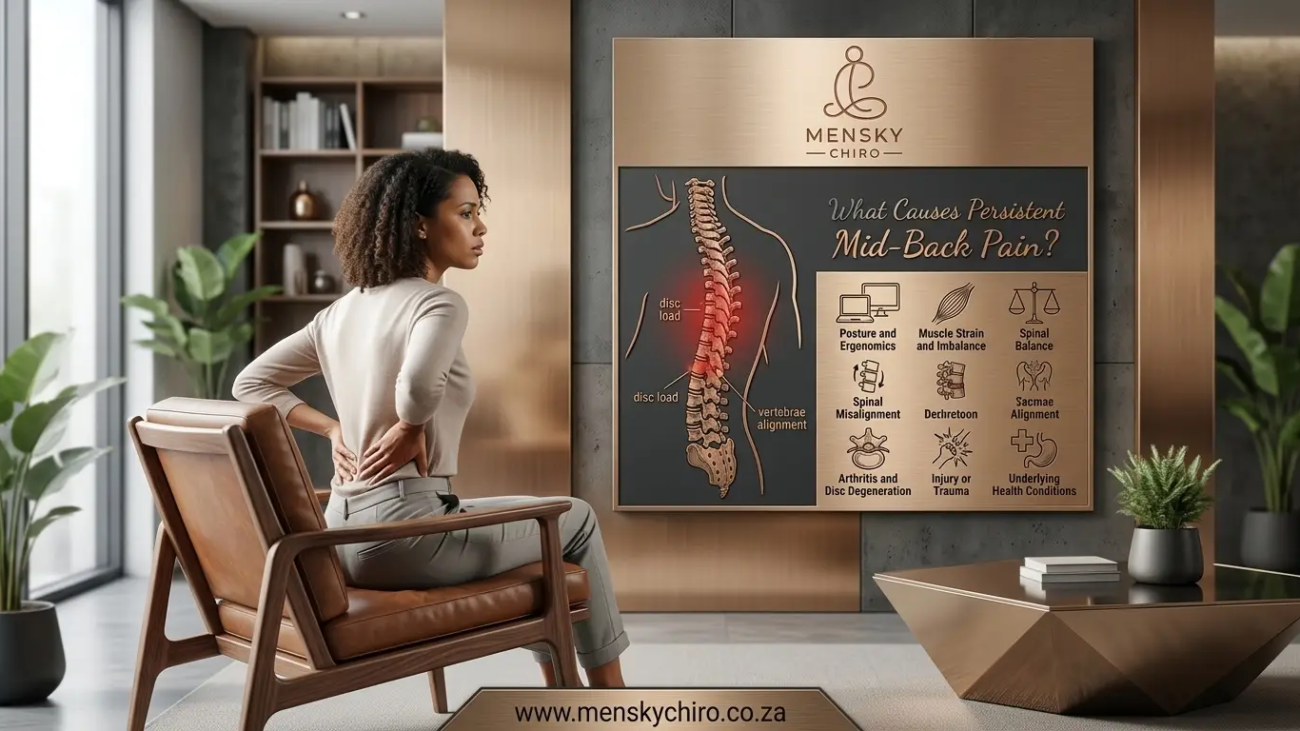
Why Back Pain Is So Common Among Johannesburg Professionals

If you’re a professional in Johannesburg, you probably know that nagging ache in your lower back all too well. It creeps in after another long day at the office, worsens during the evening drive home through Sandton or Rosebank traffic, and leaves you reaching for painkillers by the weekend. You’re not alone. Back pain has become an epidemic among Johannesburg’s busy professionals – from accountants in Rosebank to tech specialists in Melrose and lawyers in the CBD.

At Mensky Chiro in Bluebird Shopping Centre, Birnam, Dr. Galia Mensky sees this pattern every week. Hard-working men and women who sit for hours, manage high-pressure deadlines, and navigate the unique demands of Jozi life come through the door seeking real solutions, not just temporary fixes.

Johannesburg’s professional scene moves fast. Many of us spend 8–12 hours a day in front of screens, followed by long commutes on the N1 or M1, and then evenings catching up on emails or family responsibilities. This combination creates the perfect storm for spinal stress.

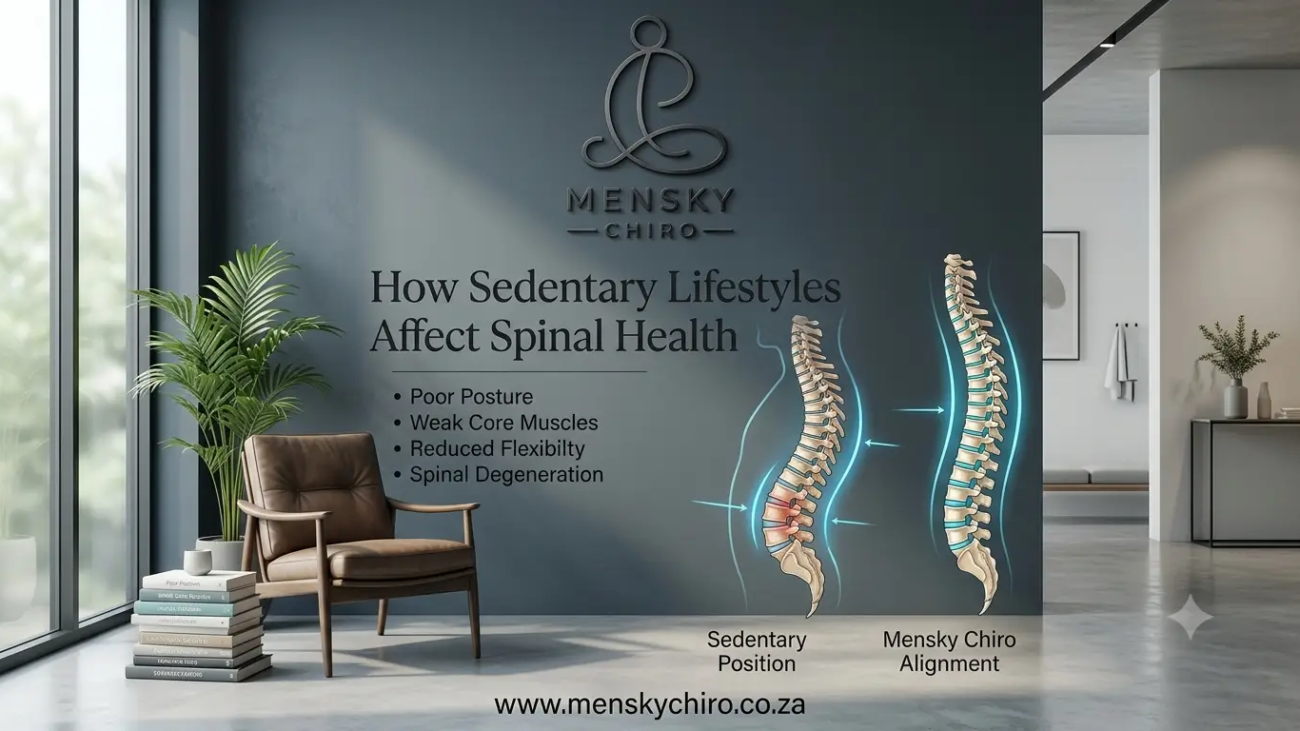
Prolonged sitting is one of the biggest culprits. When you sit for hours, your hip flexors tighten, your pelvis tilts forward, and your lower back loses its natural curve. Over time, the discs in your lumbar spine experience uneven pressure, muscles weaken, and joints become stiff. Studies show that office workers who sit more than six hours daily face significantly higher risks of chronic low back pain.

Add Johannesburg’s notorious traffic. Sitting in stop-start congestion for an hour or more each way puts your spine in a compressed, slightly twisted position. The vibration from the road and the constant braking add micro-trauma that accumulates silently.

Then there’s stress. Deadlines, client meetings, and the fast pace of corporate Johannesburg trigger muscle tension, especially in the lower back and shoulders. When you’re stressed, your body produces more cortisol, which can increase inflammation and make existing muscle tightness even worse.

Poor ergonomics make everything worse. Many Johannesburg offices still have generic chairs and desks that don’t support individual body types. Laptops placed on tables instead of proper risers force you to hunch forward, straining your entire spine from neck to pelvis.

At Mensky Chiro, Dr. Galia Mensky commonly treats several patterns:

  • Mechanical lower back pain — caused by joint restrictions and muscle imbalances from prolonged sitting.
  • Disc-related discomfort — where the cushions between vertebrae become irritated from constant compression.
  • Facet joint irritation — small joints in the spine that become inflamed due to poor posture.
  • Muscle strain and trigger points — tight bands in the quadratus lumborum or erector spinae muscles that refer pain across the lower back.

Many patients also report sciatica-like symptoms – that shooting pain or numbness down one leg – triggered by tight piriformis muscles or pelvic misalignment after long days at a desk.

Too many professionals in Johannesburg tell themselves the pain is “just part of the job” or “will go away on the weekend.” Unfortunately, ignoring back pain often leads to worsening problems. What starts as occasional stiffness can progress to chronic pain, reduced mobility, headaches, and even decreased productivity at work.

The good news? Most back pain in professionals responds very well to conservative, drug-free care when addressed early.

Chiropractic care focuses on the root mechanical causes rather than just masking symptoms. At Mensky Chiro, Dr. Galia Mensky uses a gentle, personalised approach tailored to busy professionals.

Spinal adjustments restore proper movement to restricted joints in the lower back and pelvis. Many patients notice immediate improvement in mobility and reduced pain after the first few sessions.

Soft tissue techniques, including instrument-assisted soft tissue mobilisation (IASTM) and dry needling, release tight muscles and break down adhesions caused by hours of sitting.

Postural correction and rehabilitation help rebuild the core and glute strength that often weakens in desk-based jobs. Dr. Mensky provides simple, office-friendly exercises you can do between meetings.

Ergonomic advice specific to Johannesburg workspaces – whether you’re in a Sandton high-rise or working hybrid from home in Birnam or Dunkeld.

Unlike pain medication, which only offers short-term relief and can carry side effects with long-term use, chiropractic care addresses the underlying dysfunction so your body can heal naturally.

You don’t have to wait for pain to worsen. Here are practical steps that fit into a busy Johannesburg professional’s schedule:

  1. Set movement reminders — Stand up and walk for 2–3 minutes every 30–45 minutes. Use the stairs instead of the lift when heading to meetings in your office building.
  2. Optimise your workstation — Ensure your screen is at eye level, feet are flat on the floor, and your chair supports your lower back’s natural curve. If your company allows, request a standing desk converter.
  3. Commute smarter — Adjust your car seat so your knees are slightly lower than your hips. Use a small lumbar support cushion if needed. During traffic, gently tighten your core and perform seated pelvic tilts.
  4. Strengthen your core daily — Spend 5–10 minutes on simple exercises like bird-dogs or glute bridges before or after work. Strong core muscles protect your spine during long sitting periods.
  5. Manage stress actively — Even 10 minutes of deep breathing or a short walk in a nearby park (like the Johannesburg Botanical Gardens on weekends) can reduce muscle tension.
  6. Stay hydrated — Dehydration makes spinal discs less resilient. Keep a water bottle at your desk and aim for 2–3 litres daily.

Don’t wait until the pain becomes unbearable. Consider booking an assessment at Mensky Chiro if you experience:

  • Back pain that lasts more than a few days
  • Discomfort that radiates into your hips or legs
  • Stiffness that makes it hard to get out of bed or stand after sitting
  • Reduced ability to concentrate at work because of pain
  • Pain that returns every week despite rest or medication

Early intervention prevents small issues from becoming chronic problems that affect your career and quality of life.

Johannesburg professionals face unique challenges. The combination of high-altitude climate (which can affect hydration and muscle recovery), variable office air-conditioning, and the physical demands of navigating our hilly suburbs all add subtle stress to the spine.

Many patients at Mensky Chiro in Bluebird Shopping Centre, Birnam, mention how their pain intensifies during load-shedding when they work from less ergonomic home setups, or after weekend team-building events that involve more physical activity than their bodies are used to.

Dr. Galia Mensky understands this local lifestyle because she serves the Johannesburg community directly. Her practice is conveniently located for professionals in Melrose, Dunkeld, Rosebank, and surrounding areas – easy to reach before or after work.

Back pain doesn’t have to be an accepted part of being a professional in Johannesburg. By understanding the causes – prolonged sitting, poor ergonomics, stress, and commuting – and taking proactive steps with expert chiropractic care, you can move better, feel stronger, and perform at your best.

At Mensky Chiro, Dr. Galia Mensky and her team are committed to helping Johannesburg professionals overcome back pain through gentle, effective, and personalised treatment plans. Whether you’re dealing with nagging lower back stiffness or sharper episodes that disrupt your week, we focus on getting to the root cause so you can enjoy long-term relief.

Ready to move better and live stronger?

Book your initial chiropractic assessment at Mensky Chiro in Bluebird Shopping Centre, Birnam today. Call 083 296 4411 or email info@menskychiro.co.za to schedule your appointment.

Don’t let back pain hold you back from the career and life you love in Johannesburg. Take the first step toward lasting relief – your spine (and your future self) will thank you.