
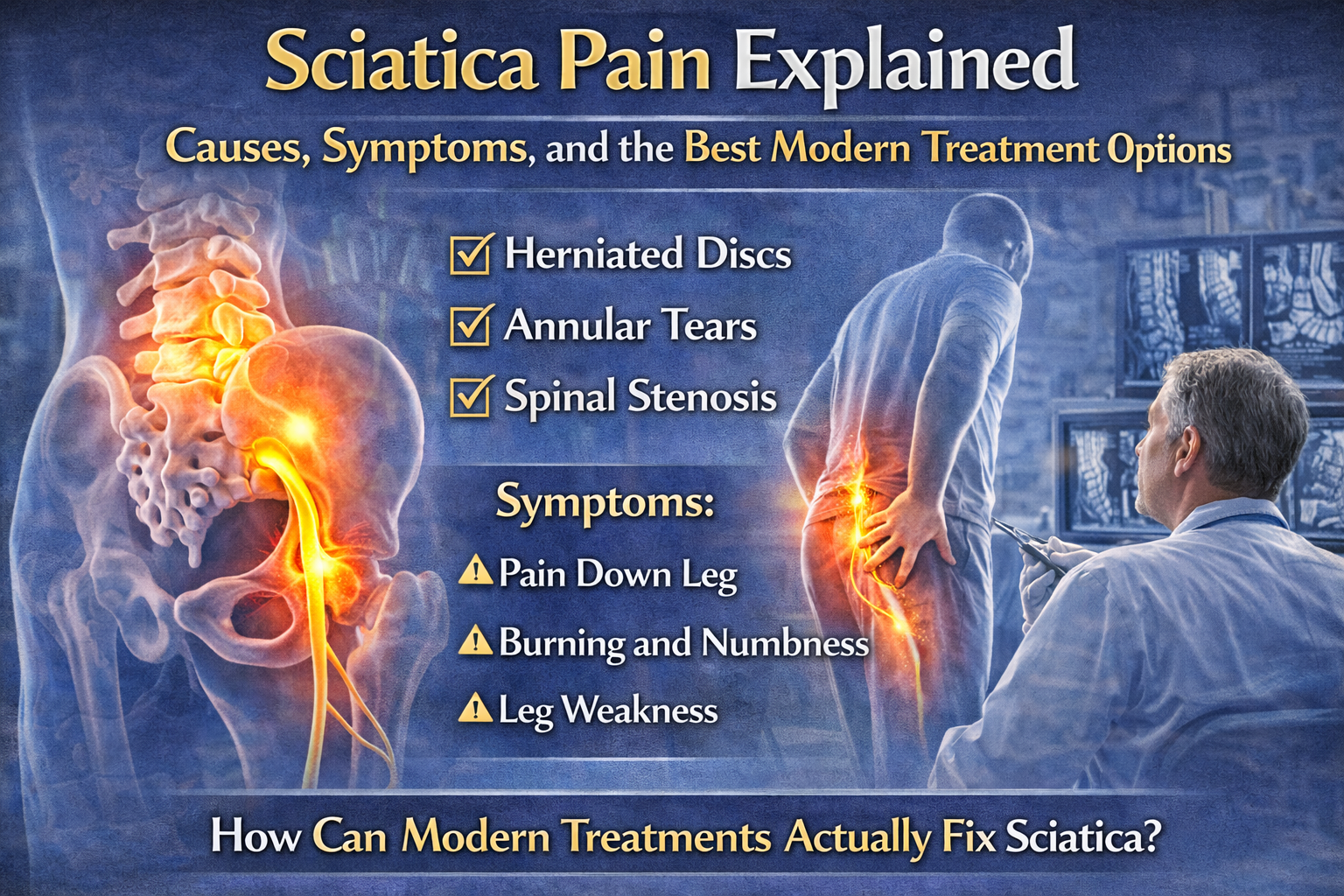
That shooting pain that starts in your lower back or buttock and travels down one leg can stop you in your tracks. Some days it feels like a deep ache, other times it’s a sharp, electric sensation that makes walking, sitting, or even sleeping difficult. If you’ve experienced this, you’re likely dealing with sciatica — a common but often misunderstood condition.
At Mensky Chiro in Bluebird Shopping Centre, Birnam, Dr. Galia Mensky sees many Johannesburg patients frustrated by sciatica. They’ve often tried painkillers, rest, or heat packs with only temporary relief. The good news is that when you understand what’s really causing the pain, effective, natural solutions become available.
What Exactly Is Sciatica?
Sciatica isn’t a diagnosis on its own — it’s a set of symptoms. It occurs when the sciatic nerve, the longest and thickest nerve in the body, becomes irritated or compressed. This nerve runs from your lower back, through your hips and buttocks, and down each leg.
When irritated, the sciatic nerve can cause pain anywhere along its path — from the lower back to the calf or even the foot. You might also feel numbness, tingling (“pins and needles”), or muscle weakness in the affected leg.
The pain is usually felt on only one side of the body and can range from mild discomfort to severe, debilitating pain that makes daily activities nearly impossible.
Common Causes of Sciatica in Johannesburg Adults
Several mechanical issues can irritate the sciatic nerve. Dr. Galia Mensky commonly sees these causes in her Birnam practice:
Lumbar disc irritation or herniation When a disc in the lower back bulges or herniates, it can press on or inflame the nerve roots that form the sciatic nerve.
Piriformis syndrome The piriformis muscle, located deep in the buttock, can tighten or spasm and compress the sciatic nerve as it passes underneath or through the muscle. This is very common in people who sit for long periods.
Sacroiliac (SI) joint dysfunction Misalignment or inflammation in the pelvic joints can create uneven pressure and refer pain along the sciatic pathway.
Spinal stenosis or facet joint irritation Narrowing of the spinal canal or inflamed small joints in the lower back can irritate the nerve, especially in older adults or those with long-standing poor posture.
Muscle imbalances from prolonged sitting Many Johannesburg professionals who sit at desks all day develop tight hip flexors and weak glute muscles. This imbalance puts extra stress on the lower back and pelvis, increasing sciatica risk.
Other contributing factors include pregnancy (due to added weight and relaxin hormone), previous injuries, and repetitive twisting movements.
Why Sciatica Pain Feels So Different
Unlike simple muscle strain, sciatic pain often has a distinct “nerve” quality — sharp, burning, or electric. It can worsen with coughing, sneezing, sitting for long periods, or driving. Many patients notice the pain intensifies after long commutes on Johannesburg highways or after sitting through long meetings.
The pain can come and go, or it may become constant. Some people also experience lower back pain along with the leg symptoms, while others feel mostly leg pain with very little back discomfort.
Practical Tips to Manage Sciatica Symptoms at Home
While professional care is often needed for lasting relief, these strategies can help reduce irritation in the meantime:
- Avoid prolonged sitting Stand up and walk around every 20–30 minutes. When driving, take breaks to stretch your legs and hips.
- Use ice and heat wisely In the first 48–72 hours of a flare-up, use ice to reduce inflammation. After that, alternate with gentle heat to relax tight muscles.
- Gentle movement is better than complete rest Short, frequent walks are usually more helpful than lying down all day. Avoid high-impact activities until the acute pain settles.
- Try the “figure-4” stretch carefully While lying on your back, cross the affected leg over the other knee and gently pull the thigh toward you. Stop if it increases leg pain.
- Support your lower back when sitting Use a small lumbar roll or rolled towel behind your lower back to maintain its natural curve.
- Sleep position matters Sleep on your side with a pillow between your knees to keep your pelvis aligned.
These tips offer temporary relief, but they work best when combined with professional treatment that addresses the root cause.
When to See a Chiropractor for Sciatica
Don’t wait until the pain becomes unbearable. Visit a chiropractor Johannesburg patients trust when you notice:
- Sharp pain, numbness, or tingling running down one leg
- Pain that lasts more than a few days despite rest and home care
- Weakness in the leg or foot (difficulty lifting your foot or toes)
- Pain that interferes with walking, working, or sleeping
- Recurring episodes of sciatica
Early intervention often leads to faster recovery and helps prevent the problem from becoming chronic.
Local Relevance: Sciatica in Johannesburg Lifestyle
Johannesburg’s combination of long sitting hours in offices, stressful commutes on the N1 and M1, and sometimes uneven walking surfaces in our suburbs creates ideal conditions for sciatica to develop. Many patients at Mensky Chiro mention that their symptoms worsen after long days at their desks followed by sitting in traffic, or after weekends spent on their feet doing household chores.
Dr. Galia Mensky understands these local realities. Her practice at Bluebird Shopping Centre, Birnam, is easily accessible for residents from Melrose, Dunkeld, Rosebank, and surrounding areas who need practical back pain treatment Johannesburg without long travel times during painful flare-ups.
How Chiropractic Care Helps Sciatica
Chiropractic care focuses on restoring proper movement and alignment to the lower back and pelvis, reducing pressure on the sciatic nerve. Dr. Mensky uses gentle spinal adjustments, soft tissue techniques, and specific rehabilitation exercises tailored to each patient’s condition.
Many patients experience reduced leg pain and improved mobility within the first few weeks. Unlike pain medication that only masks symptoms, chiropractic treatment aims to correct the underlying mechanical dysfunction so the nerve can heal naturally.
Conclusion: You Don’t Have to Live with Sciatica Pain
Sciatica can be incredibly frustrating and limiting, but it usually responds well to the right approach. Understanding the cause and addressing it with gentle, targeted care can help you return to your normal daily activities with far less discomfort.
At Mensky Chiro in Bluebird Shopping Centre, Birnam, Dr. Galia Mensky offers individualised chiropractic care for sciatica that focuses on long-term relief and prevention of recurrence. Many Johannesburg patients have found lasting improvement through this natural, drug-free method.
If sciatica is affecting your work, sleep, or quality of life, you have effective options available.
Ready to find real relief from sciatica?
Book your chiropractic assessment today at Mensky Chiro. Call 083 296 4411 or visit https://menskychiro.co.za to schedule your appointment.
Don’t let sciatica control your days. Take the first step toward comfortable movement and lasting back pain treatment Johannesburg you can trust.
FAQ Section
Q1: What is the difference between back pain and sciatica? A: Sciatica involves irritation of the sciatic nerve and typically causes pain, numbness, or tingling that travels down the leg, whereas simple back pain usually stays in the lower back area.
Q2: Can chiropractic care really help sciatica? A: Yes. By restoring proper alignment and movement to the spine and pelvis, chiropractic adjustments often reduce pressure on the sciatic nerve and provide significant relief.
Q3: How many sessions are typically needed for sciatica relief? A: Many patients notice improvement within 4–8 sessions, though the exact number depends on the cause and how long the symptoms have been present.
Q4: Is it safe to adjust the spine when someone has sciatica? A: When performed by an experienced chiropractor after a thorough assessment, spinal adjustments are safe and often very effective for sciatica.
Q5: Should I see a doctor or chiropractor first for sciatica? A: For most mechanical cases of sciatica, seeing a chiropractor early is appropriate. If you have severe weakness, bowel or bladder changes, or fever, seek medical attention immediately.

Add a Comment