
Mensky Chiro
Your Trusted Chiropractor in Melrose/Atholl – Move Better. Live Stronger.
THE MENSKY JOURNAL · YOUR CARE, EXPLAINED
Kinesiology Taping: What It Can Do and How to Care for Your Tape
Kinesiology tape is an elastic adhesive tape applied to the skin as part of care for selected muscle or joint problems. It may be used with the aim of providing support or changing how movement feels, but it does not establish a diagnosis or guarantee recovery. The right questions are why it is being recommended for you, what benefit you should look for and when to remove it.
Those questions matter whether you spend your week at a Melrose desk, enjoy an Atholl walk or are planning a more active spring weekend. A strip of tape can look reassuring. It still needs a clear purpose and sensible instructions.
What is kinesiology taping?
Kinesiology tape stretches and moves with the skin. It differs from rigid sports strapping, which is generally used with a different degree of restriction. The material and application matter, so copying the colour or pattern worn by another person does not tell you whether it will suit your problem.
Mensky Chiro lists kinesiology and dynamic taping among its treatment options. These are not interchangeable names for every kind of sports tape. Ask which type is being recommended, what it is intended to do and how that application fits your assessment. The practice can confirm the specific product and approach used for your care.
You may see tape around a shoulder, knee or another area and assume that it is holding a damaged structure in place. Appearance alone cannot show the reason for the application. It is better to ask for a simple explanation than to infer a diagnosis from a photograph.
What can tape realistically help with?
A practitioner may suggest a trial of taping alongside other care, with a specific movement or daily task used to review the response. Some people notice a change in comfort or a feeling of support. That experience should be assessed in the context of the underlying problem and the rest of the plan.
Research does not support treating tape as a universal solution. For example, a Cochrane review of kinesiology taping for rotator cuff disease found very uncertain evidence about its effects on pain and function. That finding concerns a particular shoulder problem; it should not be stretched into a promise about every condition or tape product.
A useful trial therefore starts with a modest, observable question: does this application make the agreed activity more comfortable, without causing new problems? If the answer is no, discuss whether continuing makes sense. The presence of tape is not itself evidence that treatment is working.
Before the tape goes on
Mention previous reactions to plasters, adhesives or tape. Show the practitioner any rash, broken skin or irritation near the area. Also explain if sensation is reduced or you cannot easily inspect the skin yourself. These details can change whether taping is appropriate and how it should be monitored.
Ask how your skin should be prepared. It is generally helpful to arrive with the area clean and free from creams, but follow the instructions you are given. Do not aggressively shave or scrub sensitive skin immediately before an appointment simply to make tape stick. If hair removal is needed, ask how and when to do it safely.
Leave with answers to these five questions
- What is this application intended to help me do?
- How long should I leave this particular tape on?
- Can I shower or exercise with it, and are there restrictions?
- What skin changes mean I should remove it?
- How should I remove it, and should I contact you before reapplying?
Write the answers down if you are likely to forget them. A generic internet wear time should not override instructions for your skin, the product and the reason for treatment.
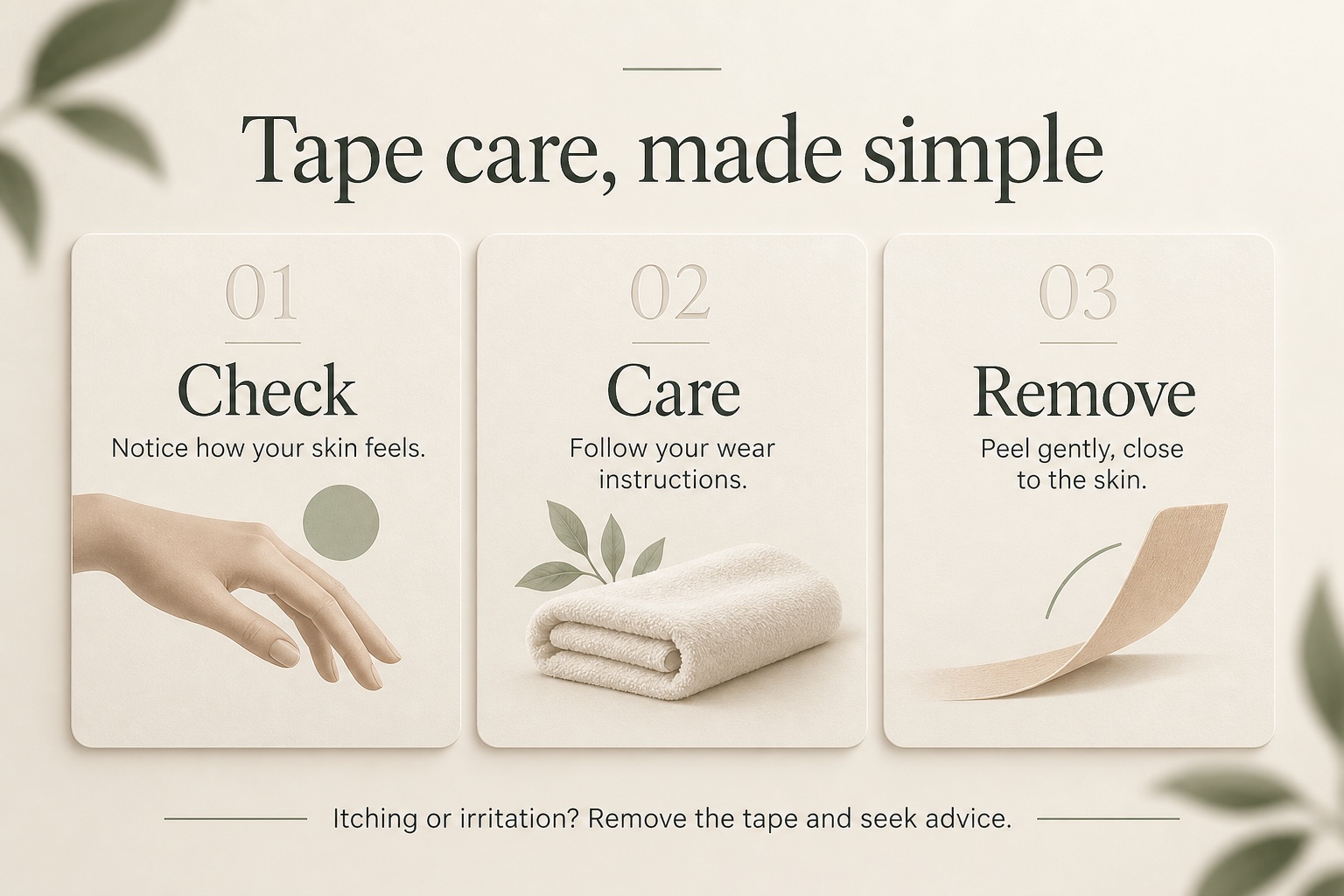
Looking after your skin while wearing tape
Check how the taped area feels and inspect accessible edges regularly. Irritation is not something to endure for the sake of treatment. Itching, burning, a rash or blistering are reasons to remove the tape and seek advice. If you develop a severe reaction or feel unwell, obtain appropriate medical help.
The Royal Berkshire NHS guide to kinesiology tape provides practical patient advice on skin monitoring and careful removal. Its leaflet concerns hand therapy, so your practitioner’s instructions remain important for other areas and products.
Ask about water exposure rather than assuming that every tape can be treated the same way. If showering is permitted, follow the drying instructions and avoid rubbing at the adhesive edges. Do not apply extra heat to make it stick. If the tape begins to peel or becomes uncomfortable, ask whether it should be removed rather than adding more layers yourself.
Keep an eye on the underlying symptoms too. New swelling, altered sensation or increasing pain should not be dismissed as normal just because the area has been taped. Remove uncomfortable tape and arrange advice about the symptom, particularly if it persists.
Removing tape without rushing
Allow enough time to remove it gently. Support the skin and peel the tape back slowly, keeping it close to the skin rather than pulling sharply upwards. Follow any advice about using water or an appropriate removal product. Stop if the skin is lifting, blistered or unusually painful and seek guidance.
Do not immediately cover irritated skin with a fresh strip. Give the practitioner an accurate description of the reaction and ask what to do next. A photograph taken for your own consultation can help show a reaction that has changed by the time you are seen.
If you cannot comfortably reach the tape, arrange help and explain the removal instructions to that person. This small practical detail is worth discussing before application, especially for an area on your back or shoulder.
Can you keep training with tape on?
That decision depends on the problem, not the tape. Ask which activities are suitable and how to judge your response during and after them. Feeling supported does not confirm that a tissue has healed or that a demanding session is safe.
For illustration, someone planning a spring walk may feel more comfortable after taping. The useful next step is to follow the agreed walking plan and report how the area responds, rather than immediately doubling the distance. This is a general example, not a Mensky Chiro patient outcome.
If your symptoms change significantly, contact the practitioner before carrying on. Tape should not be used to hide a worsening problem or postpone assessment. Likewise, do not copy an athlete’s application and assume it makes your own return to sport appropriate.
Frequently asked questions
Can I apply kinesiology tape myself?
Ask whether self-application is appropriate for your situation. If it is, request a demonstration and specific instructions for placement, tension, wear time and removal. A video cannot assess your skin or determine the cause of your symptoms.
Does tape colour make a difference?
Choose based on the product and clinical purpose rather than colour. Ask the practitioner which material and application they recommend. Matching a professional athlete’s tape colour does not reproduce their treatment plan.
Will taping replace rehabilitation?
Taping may be considered as an addition to care. It does not automatically replace movement advice, exercise or further assessment. Ask what role it plays and how you will decide whether it is worth continuing.
How long should I leave it on?
There is no single wear time suitable for every application and person. Follow the instructions provided for your tape and remove it sooner if irritation or other problems develop. Contact the practice if you were not given a clear removal time.
Ask Mensky Chiro about an individual taping plan
For taping enquiries in Melrose, Atholl and the surrounding Johannesburg area, contact Mensky Chiro. Describe the activity that is difficult and any previous skin reactions. The team can advise on booking an assessment and confirm the appointment scope and fees.
Call 087 075 0990, email info@menskychiro.co.za or use the contact page. Find the practice at Shop No 23A, Level 1, Blubird Shopping Centre, Birnam, Johannesburg, 2196.
This article is general information. Follow the individual instructions given for your care.
Make room for more comfortable movement
Talk to Mensky Chiro about the next step for your care.
Enquire about an appointment →
087 075 0990 · info@menskychiro.co.za